
Ground signs and pavement markings are the official terms for those visual indicators you see on roads and walkways. They include regulatory markings (like solid white lines and stop bars), warning signs (such as curve indicators and pedestrian crossings), and directional markers (including turn arrows and lane designations). You'll commonly find these signs made from materials like thermoplastic, traffic paint, or epoxy, with each serving specific purposes for traffic control and safety. These markings follow strict standardization guidelines for color, size, and placement to guarantee consistent communication across different regions. Understanding these ground-based indicators will enhance your navigation and driving safety.
Key Takeaway
- Ground signs include pavement markings, which consist of painted or thermoplastic lines and symbols on roadway surfaces.
- Regulatory ground signs include solid white lines, broken white lines, and double yellow lines that control traffic flow.
- Warning ground signs are markings that alert drivers to hazards, including alignment signs, cross-traffic signs, and school zone indicators.
- Directional road surface markings show drivers where to position their vehicles through arrows, lane designations, and turn bay symbols.
- Signs in the ground also include constructed features like survey markers, boundary posts, and geological markers for navigation purposes.
Types of Ground Signs
Ground signs appear in several distinct forms, including tracks, droppings, trails, nests, and feeding evidence. You'll find these natural indicators help you understand wildlife patterns, geological features, and environmental changes in your area.
Key Categories of Ground Signs:
- Tracks and Prints
- Animal footprints in mud, sand, or snow
- Human-made impressions from vehicles or equipment
- Geological pressure marks from natural forces
- Organic Deposits
- Animal droppings and scat
- Plant debris and fallen vegetation
- Natural soil deposits and mineral formations
- Constructed Features
- Animal burrows and dens
- Bird nests and roosting areas
- Human-made markers and survey points
- Feeding Evidence
- Bark strippings
- Scattered seed husks
- Broken branches
You'll notice that ground signs often appear in patterns, with 73% of wildlife signs occurring along established pathways or near water sources. When you're examining these signs, you'll want to reflect on their age, frequency, and relationship to surrounding features. Understanding these patterns helps you predict movement, identify species presence, and track environmental changes in your area.
Regulatory Pavement Markings
Regulatory pavement markings serve as essential traffic control devices that you'll encounter on roads and highways everywhere. These markings help you navigate safely while providing vital information about traffic flow, lane usage, and road regulations.
Key Regulatory Marking Types:
- Solid white lines: You'll find these marking lane boundaries and road edges, indicating areas where lane changes aren't permitted
- Broken white lines: These allow you to change lanes when it's safe
- Double yellow lines: You'll see these center lines prohibiting passing in both directions
- Single yellow lines: These separate traffic flowing in opposite directions
- Stop lines: Thick white bars indicating where you must stop at intersections
Additional Regulatory Elements:
- Crosswalk markings: Consisting of parallel white lines that you'll need to yield to pedestrians
- Turn arrows: Directional indicators showing which movements are permitted in specific lanes
- Word markings: "STOP," "YIELD," or "ONLY" painted directly on the pavement
When you're driving, these markings work in conjunction with vertical signs to create a thorough traffic control system. You'll need to follow them just as strictly as posted signs, as they carry the same legal authority.
Warning Ground Signs
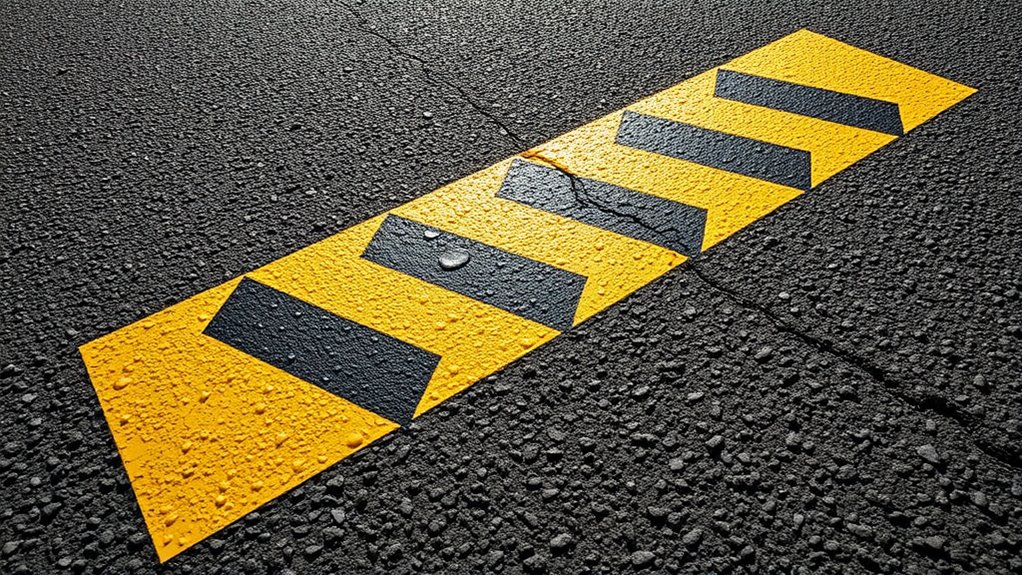
While regulatory pavement markings tell you what you must do, warning ground signs alert you to potential hazards ahead. You'll typically find these diamond-shaped signs in yellow or fluorescent yellow-green colors, designed to catch your attention before you encounter dangerous conditions.
Key Warning Ground Sign Categories:
- Roadway Alignment Signs: You'll see these before sharp curves, winding roads, or steep grades, giving you time to adjust your speed and position
- Cross-Traffic Signs: These alert you to upcoming intersections, merging lanes, or potential vehicle conflicts
- Pedestrian and School Signs: You'll notice these fluorescent yellow-green markers near crosswalks, school zones, and high foot-traffic areas
- Weather-Related Signs: Look for these signs warning of potential ice, flooding, or falling rocks in prone areas
Understanding Warning Sign Placement:
- Positioned 500-1500 feet before the hazard, depending on speed limits
- Mounted at driver eye level (approximately 6-7 feet high)
- Often paired with supplementary plaques providing specific details
- Frequently combined with flashing beacons in high-risk areas
Directional Road Surface Markings
- Directional arrows – You'll spot these showing straight, left, right, or combination movements, helping you position your vehicle correctly before reaching an intersection
- Lane designation markings – You'll see these indicate specific lanes for buses, bikes, or high-occupancy vehicles
- Turn bay symbols – You'll encounter these showing where you should position yourself for upcoming turns
When you're approaching complex intersections, you'll notice multiple directional indicators working together. The markings typically feature retroreflective materials that illuminate under your headlights, ensuring visibility during nighttime driving. You'll also find these markings particularly helpful in unfamiliar areas, where they serve as visual confirmation of GPS instructions or navigation signs.
Materials and Installation Methods

Under modern roadway standards, road surface markings use specialized materials designed for durability and visibility. You'll find that the most common materials include thermoplastic, paint, epoxy, and preformed tape, each serving specific purposes in different environments.
Materials and Application Methods:
- Thermoplastic
- Heat-applied at 400°F
- Lasts 3-5 years
- Contains reflective glass beads
- Best for high-traffic areas
- Traffic Paint
- Quick-drying latex or alkyd-based
- Requires 2-3 annual reapplications
- Most economical option
- Ideal for temporary markings
- Epoxy
- Two-component chemical cure
- 7-10 year lifespan
- Superior weather resistance
- Preferred for concrete surfaces
Installation Techniques:
- Extrusion: You'll see this method used for thick, raised lines
- Spray: You'll find this approach best for thin lines and symbols
- Inlay: You'll notice this technique for preformed tape installation
- Grooving: You'll benefit from this method in snow-plow regions
When you're selecting materials, you'll need to take into account factors like traffic volume, climate conditions, and surface type to guarantee ideal performance and longevity of your road markings.
Maintenance and Durability
Road marking longevity depends heavily on proper maintenance and environmental factors. You'll find that ground signs and markings require regular inspection and upkeep to maintain their effectiveness, especially in areas with heavy traffic or severe weather conditions.
Durability Factors to Contemplate:
- Material composition – thermoplastic markings typically last 3-5 years, while epoxy-based materials can extend to 7-10 years
- Traffic volume impact – high-traffic areas may need reapplication every 12-18 months
- Weather exposure – UV rays, rain, and snow can reduce visibility and material integrity by up to 40% annually
To maximize your ground signs' lifespan, you'll need to implement a systematic maintenance schedule. This includes regular cleaning to remove dirt and debris, prompt repairs of damaged sections, and periodic retroreflectivity testing to ascertain visibility standards are met.
Advanced maintenance techniques now incorporate innovative solutions like self-healing materials and smart monitoring systems. You can utilize these technologies to track wear patterns and schedule preventive maintenance more effectively, reducing both costs and downtime while guaranteeing consistent performance throughout the sign's intended service life.
International Standards and Regulations
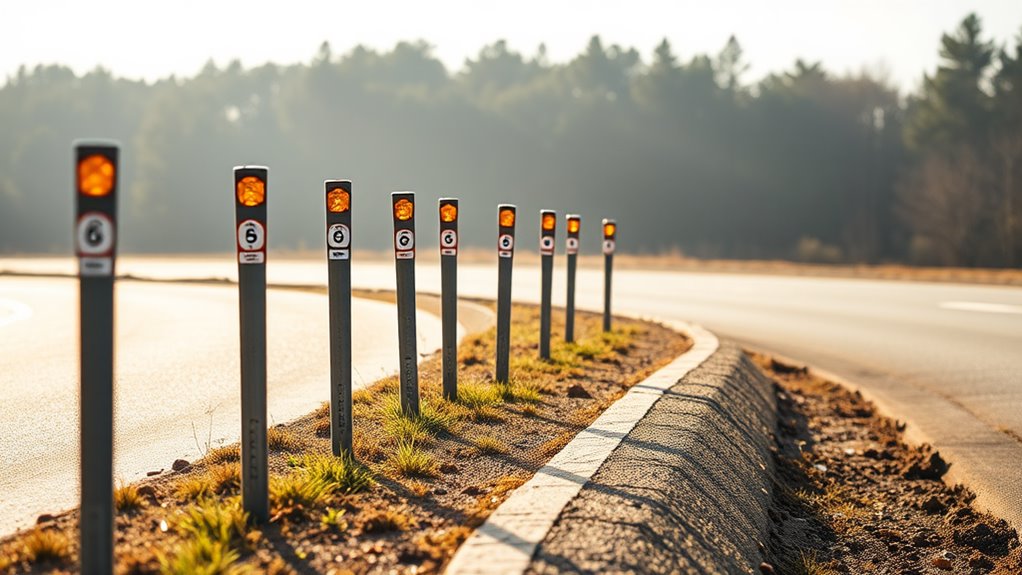
Three major international bodies govern ground signage standards worldwide: the Vienna Convention on Road Signs and Signals, ISO regulations, and regional agreements like the European Union's EN 12899 standard. You'll need to comply with these regulations when installing or maintaining ground signs in international contexts.
Key International Requirements:
- Sign retroreflectivity must meet minimum standards of 50 cd/lx/m² for residential areas and 70 cd/lx/m² for highways
- Material durability standards require signs to withstand 10 years of weather exposure
- Text height requirements specify 2.5-inch minimum lettering for 25 mph zones
- Color standardization follows international coding: red for prohibition, yellow for warning
If you're installing signs across borders, you'll need to take into account:
- Regional variations in measurement systems (metric vs. imperial)
- Local language requirements and pictogram standards
- Wind load calculations specific to geographic zones
- Environmental impact assessments
You can access extensive guidelines through the World Road Association's online portal, which provides updated standards and compliance checklists. Remember that non-compliance can result in substantial fines, typically ranging from $1,000 to $50,000 depending on the jurisdiction.
Conclusion
Ground signs and pavement markings are essential elements you'll encounter every day while traversing roads and walkways. You've probably driven over a million different markings in your lifetime, and they're all working tirelessly to keep you safe and oriented. Whether you're following directional arrows, heeding warning symbols, or observing regulatory lines, these critical markers will continue to guide your journey with precision and reliability.