Offset lithography dominates today's commercial printing market, capturing 48% of global printing volume, while digital printing accounts for 17%. You'll find offset printing used primarily for high-volume projects exceeding 500 copies, as it offers superior image quality at 2400+ DPI and cost savings of 30-50% on large orders. Digital printing, however, is rapidly gaining ground with a 15% annual growth rate, particularly for short-run jobs under 1,000 units. Your choice between these methods typically depends on your project's volume, timeline, and quality requirements. Understanding the distinct advantages of each method will help you make the most cost-effective decision for your printing needs.
Key Takeaway
- Offset lithography dominates commercial printing with 48% market share, remaining the industry standard for high-volume projects.
- Digital printing accounts for 17% of commercial printing but is growing rapidly at 15% annually.
- Offset printing provides superior image quality at 2400+ DPI and is most cost-effective for print runs over 500 copies.
- Commercial printers often use both offset and digital methods, choosing based on volume, quality requirements, and turnaround time.
- Hybrid printing solutions are emerging, combining offset and digital technologies for complex commercial projects.
Understanding Offset Printing Basics
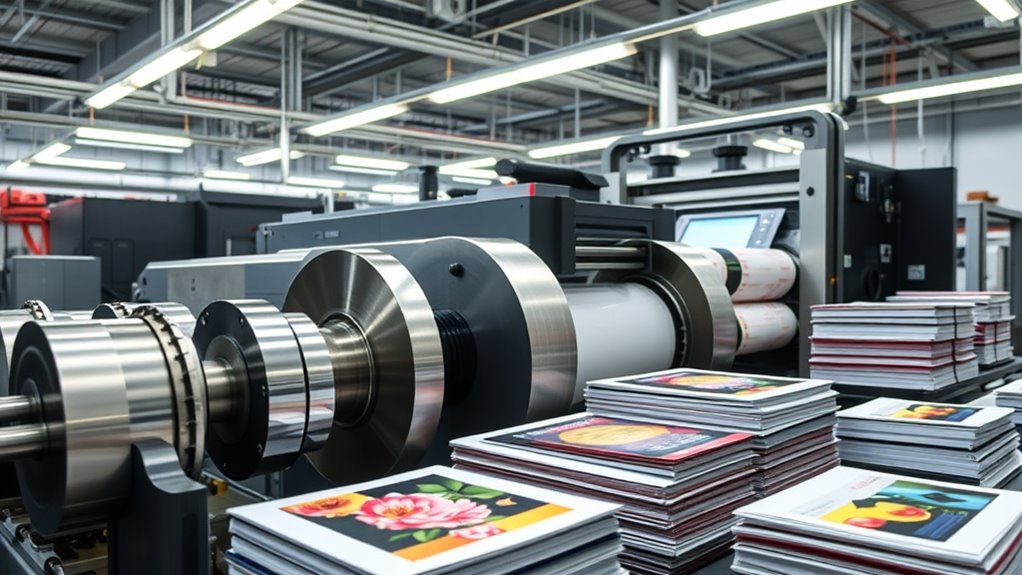
While digital printing has gained popularity in recent years, offset printing remains the industry standard for high-volume commercial projects. You'll find this method particularly cost-effective when you're printing more than 500 copies, as the price per unit decreases markedly with larger quantities.
Key Components of Offset Printing:
- Plates: You'll need aluminum plates that transfer your image onto rubber blankets
- Ink rollers: These apply the four process colors (CMYK) separately
- Blanket cylinders: They transfer the ink onto your chosen paper stock
- Paper feeding system: It maintains consistent paper flow through the press
How It Works for You:
- Your design transfers to aluminum plates, one for each color
- The plates apply ink to rubber blankets
- Your paper passes between the blanket and impression cylinder
- You get crisp, clean images with accurate color reproduction
Benefits You'll Experience:
- Superior image quality at 2400+ DPI
- Consistent color matching across print runs
- Cost savings of 30-50% on large orders
- Versatility with paper stocks and specialty inks
Digital Printing Technology Overview
Modern digital printing offers a direct alternative to offset methods, bringing speed and flexibility to smaller print runs. You'll find this technology relies on digital files sent directly to printing devices, eliminating the need for printing plates and complex setup processes.
Key Components:
- Electrophotographic printing (laser/toner-based)
- Inkjet systems (liquid ink droplets)
- Variable data capabilities
- Direct-to-substrate printing options
Benefits You'll Experience:
- Print-on-demand flexibility
- Quick turnaround times (often within 24-48 hours)
- Cost-effective short runs (1-500 pieces)
- Personalization options for each printed piece
When you're considering digital printing, you'll notice it excels in applications like:
- Marketing materials
- Business cards
- Promotional flyers
- Custom direct mail campaigns
- Short-run books and manuals
Your digital printing projects will typically achieve 95% color accuracy compared to offset printing, with resolution capabilities up to 2400 dpi. You'll find this method particularly cost-effective for runs under 500 pieces, as there's no minimum order requirement and setup costs are minimal. Digital technology continues evolving, with new innovations in toner formulations and inkjet capabilities emerging annually.
Cost Analysis Between Methods
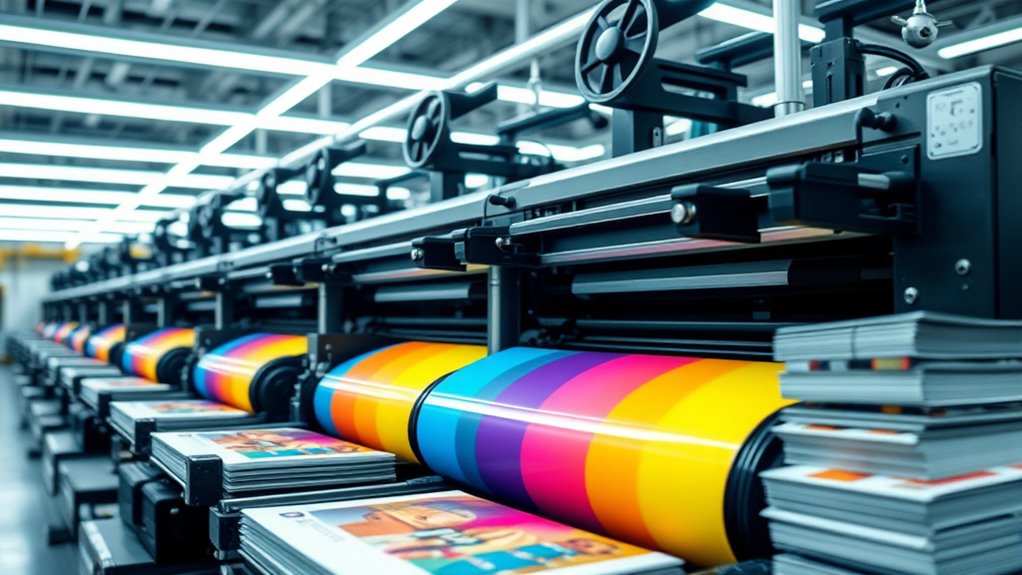
Understanding print method costs requires comparing several key factors that affect your bottom line. You'll need to evaluate both direct expenses and hidden operational costs when choosing between traditional offset and digital printing methods.
Key Cost Considerations:
- Setup Costs
- Offset: $200-600 per job
- Digital: $50-100 per job
- Per-Unit Costs
- Offset: $0.03-0.08 per piece (10,000+ units)
- Digital: $0.10-0.20 per piece (under 5,000 units)
- Time-Related Expenses
- Press setup time
- Production speed
- Labor requirements
You'll find that digital printing becomes more cost-effective for shorter runs, while offset printing delivers better value for larger quantities. The breakeven point typically occurs around 1,000-1,500 units, depending on your specific project requirements.
Additional Financial Factors:
- Material costs (paper, ink)
- Color calibration expenses
- Maintenance and equipment costs
- Storage requirements
- Waste reduction potential
When calculating total costs, you'll need to factor in your timeline, quantity needs, and quality requirements. Digital printing offers flexibility with variable data, while offset provides economies of scale for larger projects.
Quality Comparison and Applications
Print quality's distinct characteristics vary considerably between offset and digital methods. You'll find that offset printing delivers superior results for precise color matching and fine details, especially in large format applications.
Key Quality Differences:
- Resolution: Offset achieves up to 2400 DPI, while digital typically ranges from 600-1200 DPI
- Color Accuracy: Offset provides 95% Pantone matching versus digital's 85%
- Image Reproduction: Offset creates smoother gradients and sharper details
Recommended Applications:
Offset Printing:
- High-end magazines and catalogs
- Premium marketing materials
- Large format posters
- Corporate identity packages requiring exact color matching
Digital Printing:
- Short-run promotional materials
- Variable data projects
- Quick-turnaround jobs
- Personalized direct mail campaigns
When you're selecting a printing method, consider your project's specific requirements. If you need exceptional color accuracy and are printing over 500 pieces, offset printing will serve you best. For smaller quantities or projects requiring personalization, digital printing offers quality that's more than adequate for most commercial applications while providing cost advantages and faster turnaround times.
Environmental Impact of Printing Methods
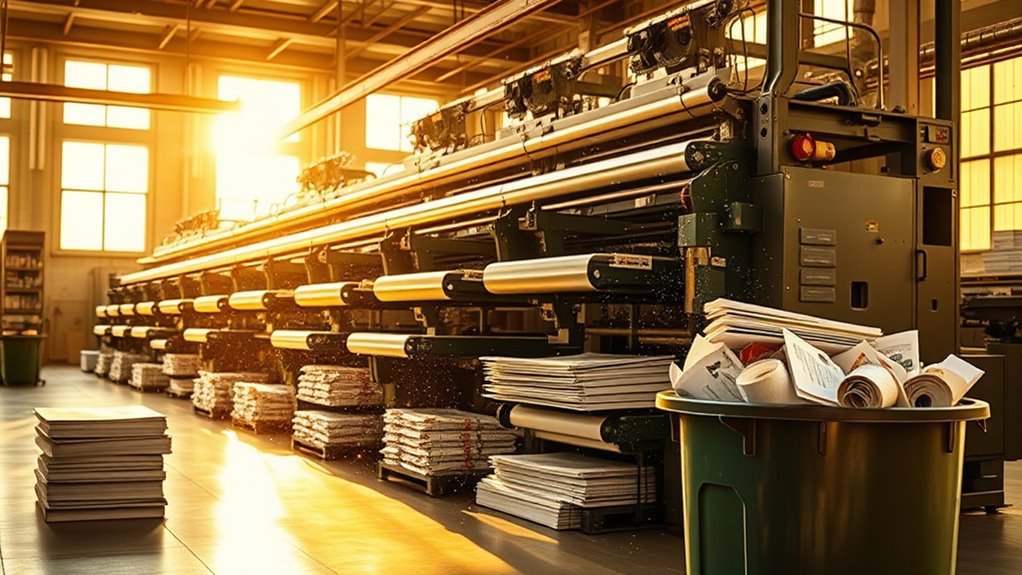
Beyond quality considerations, environmental responsibility has become a major factor in choosing printing methods. When you're selecting a commercial printing process, you'll need to evaluate several environmental impacts:
Waste and Emissions
- Digital printing produces 95% less chemical waste than traditional offset printing
- UV-curable inks release fewer volatile organic compounds (VOCs)
- Modern inkjet systems use water-based inks that are biodegradable
Energy Consumption
- Digital presses consume 50% less energy than conventional offset machines
- LED-UV curing systems require 70% less electricity than traditional UV lamps
- On-demand printing reduces waste from overruns and storage needs
Sustainable Materials
You'll find these eco-friendly options in today's market:
- Recycled paper stocks (30-100% post-consumer waste)
- Vegetable-based inks that are easier to de-ink during recycling
- FSC-certified materials from responsible forest management
Technology Advances
Current innovations you can implement include:
- Waterless printing systems that eliminate fountain solutions
- Chemistry-free platemaking processes
- Automated color management that reduces paper waste during setup
You'll want to take into account these factors when balancing environmental impact with your printing needs and budget constraints.
Market Share and Industry Trends
The commercial printing industry continues to evolve rapidly, with digital printing now capturing 17% of the global market share. You'll find that offset lithography still dominates at 48%, while flexography holds steady at 22%, and gravure maintains 13% of the market.
Current Market Trends You Should Know:
- Digital printing's growth rate is outpacing traditional methods at 15% annually
- Variable data printing has seen a 25% increase in demand since 2020
- Short-run printing jobs (under 1,000 units) have shifted heavily toward digital solutions
What You Can Expect in the Next Five Years:
- Integration of AI-driven workflow automation
- Increased adoption of hybrid printing systems
- Growth in personalized print applications
Industry analysts predict that you'll see digital printing reach 25% market share by 2025, primarily due to:
- Improved speed and quality of digital presses
- Rising demand for on-demand printing
- Cost-effectiveness for small print runs
- Environmental considerations driving technology adoption
If you're planning your printing strategy, you'll want to take into account that traditional offset printing remains dominant for large-volume jobs, while digital printing continues to capture the growing short-run and variable data markets.
Future of Commercial Printing
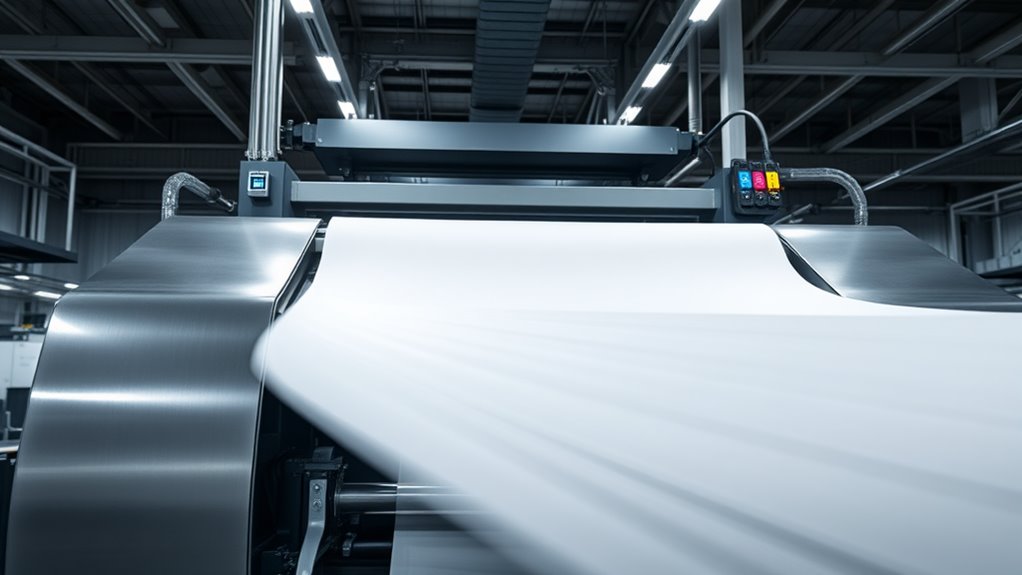
Next-generation commercial printing will radically transform how businesses produce and deliver printed materials by 2030. You'll see major shifts toward automation, sustainability, and digital integration that will reshape the industry's core operations.
Key Developments You Can Expect:
- Smart automation systems that reduce your setup times by up to 75%
- AI-driven color matching and quality control that guarantees 99.9% accuracy
- Hybrid printing solutions that combine digital and conventional methods for your complex projects
Sustainability Innovations:
- Water-based inks that cut VOC emissions by 90%
- Biodegradable substrates made from agricultural waste
- Energy-efficient presses that reduce your carbon footprint by 60%
Digital Integration Features:
- Cloud-based workflow management you can access anywhere
- Real-time production monitoring through mobile apps
- Augmented reality proofing that shows you exact print outcomes
You'll need to prepare for these changes by investing in staff training and updating your equipment gradually. The changeover will require careful planning, but you'll gain significant advantages in speed, quality, and cost-effectiveness. Watch for emerging technologies like nano-printing and 4D printing, which will offer you unprecedented customization options.
Conclusion
Like a well-oiled machine, offset printing continues to dominate today's commercial printing industry. You'll find that while digital printing's gaining ground, offset still handles about 70% of commercial print jobs worldwide. When you're planning your next large print project, you're likely to use offset printing for its cost-effectiveness at high volumes, superior color consistency, and versatile substrate options. It's a time-tested technology that's adapting to modern demands.