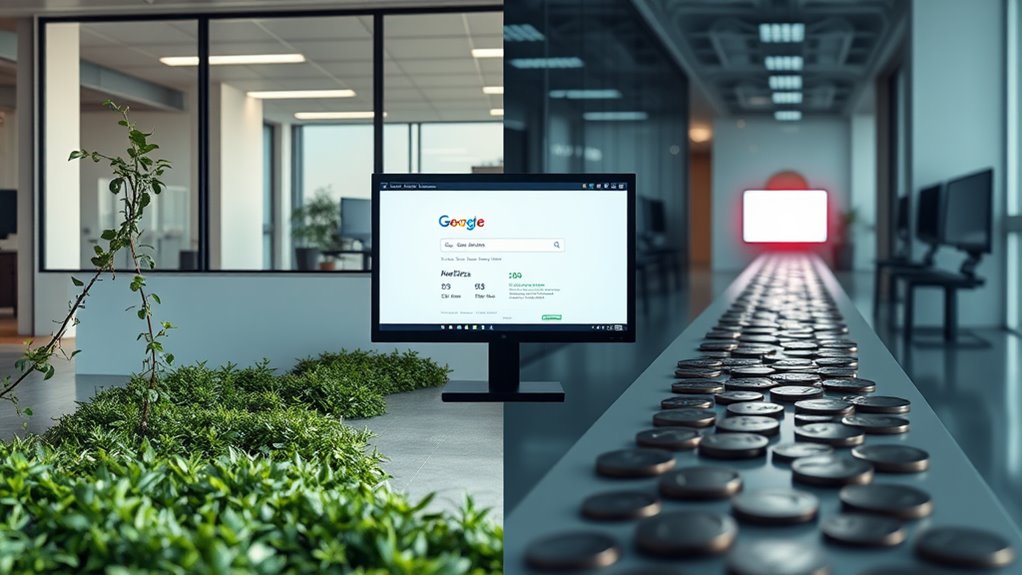
SEO and PPC are two distinct digital marketing strategies that can help you increase your website's visibility. SEO (Search Engine Optimization) involves optimizing your website's content and technical elements to rank higher in organic search results, typically taking 3-6 months to show significant results. PPC (Pay-Per-Click), on the other hand, delivers immediate visibility through paid advertising where you only pay when someone clicks on your ad, with costs ranging from $1-50+ per click. While SEO offers better long-term value with lasting organic traffic, PPC provides instant exposure and precise targeting options. Understanding both strategies' unique advantages will help you make the right choice for your business goals.
Key Takeaway
- SEO is organic search optimization requiring 6-12 months for results, while PPC provides immediate visibility through paid advertisements.
- PPC requires continuous payment per click, whereas SEO involves upfront investment with long-term organic benefits.
- SEO delivers better long-term value with 5-7 times more traffic after 12 months compared to equivalent PPC spending.
- PPC offers instant campaign testing and real-time adjustments, while SEO builds gradual but lasting authority and rankings.
- SEO typically achieves higher conversion rates (2-3 times better) than PPC once established, though requires more initial patience.
The Basics of SEO
Search Engine Optimization (SEO) works through a combination of technical and content-based strategies to improve your website's visibility in organic search results. When you implement SEO correctly, you'll enhance your site's ranking on search engines like Google without paying for ad placement.
Key Components of SEO:
- On-Page Elements
- Strategic keyword placement in titles, headers, and content
- Meta descriptions that accurately describe your pages
- Image optimization with relevant alt text
- Internal linking structure that creates logical pathways
- Technical Optimization
- Mobile responsiveness for all devices
- Fast page loading speeds (ideally under 3 seconds)
- Clean URL structures and proper site architecture
- XML sitemaps for search engine crawling
- Content Quality
- In-depth, relevant content that addresses user intent
- Regular updates to keep information current
- Properly formatted text with headers and subheaders
- Natural keyword integration (1-2% density)
You'll need to focus on both short-term and long-term strategies, as SEO typically takes 4-6 months to show significant results. By following these fundamentals, you'll build a strong foundation for sustainable organic search visibility.
Understanding PPC Advertising
Unlike SEO's organic approach, Pay-Per-Click (PPC) advertising delivers immediate visibility through paid search results. You'll only pay when someone clicks your ad, making it a cost-effective method for targeting specific audiences and driving instant traffic to your website.
Key Components of PPC:
- Keyword bidding: You'll compete with other advertisers for specific search terms
- Ad copy creation: You'll craft compelling headlines and descriptions
- Landing page optimization: You'll design pages that convert visitors
- Budget management: You'll set daily and monthly spending limits
How PPC Works in Practice:
When you launch a PPC campaign, your ads appear above organic search results, marked as "Ad" or "Sponsored." You'll typically pay between $1-2 per click for most industries, though competitive sectors like insurance or legal services can cost considerably more.
Benefits of PPC Advertising:
- Instant visibility for your brand
- Precise targeting options (location, time, device)
- Measurable ROI through detailed analytics
- Flexibility to adjust campaigns in real-time
- A/B testing capabilities for optimization
You'll find PPC particularly effective when launching new products, testing market demand, or promoting time-sensitive offers.
Cost Structure Comparison

The cost structures of SEO and PPC differ fundamentally in both investment patterns and return timelines. With PPC, you'll pay for each click your ads receive, making costs immediately tangible and directly tied to traffic volume. SEO, however, requires ongoing investment in content creation, technical optimization, and link building before you see results.
Cost Breakdown for PPC:
- Pay-per-click rates ranging from $1-$50+ depending on industry
- Immediate expense tracking and budget control
- Predictable daily or monthly spending caps
- No residual value once campaigns end
Cost Breakdown for SEO:
- Initial investment in technical optimization ($2,000-$10,000)
- Monthly content creation and optimization ($1,000-$5,000)
- Link building expenses ($500-$3,000 per month)
- Long-term value accumulation
- Continued benefits after investment stops
Your ROI Timeline:
- PPC: You'll see immediate results but must maintain constant spending
- SEO: Typically requires 6-12 months for significant returns, but results compound over time
When comparing costs, consider that while PPC offers quick wins with controlled spending, SEO's cumulative effect often provides better long-term value despite higher initial investment requirements.
Speed of Results
In terms of generating traffic, PPC delivers immediate visibility while SEO requires substantial patience before yielding results. Your PPC campaigns can start driving qualified visitors to your website within hours of launch, making it ideal for time-sensitive promotions or quick market testing.
Speed Comparison:
- PPC Results: 1-24 hours
- SEO Results: 3-6 months (average)
When you're using PPC, you'll see:
- Instant campaign activation
- Real-time performance metrics
- Immediate ranking for targeted keywords
- Quick A/B testing capabilities
With SEO, you'll experience:
- Gradual organic ranking improvements
- Cumulative authority building
- Long-term traffic momentum
- Sustained visibility growth
You'll need to take into account your business timeline when choosing between these approaches. If you're launching a new product or seasonal promotion, PPC can deliver immediate exposure. However, if you're building a long-term digital presence, SEO's compound effect will provide lasting value despite the initial waiting period. Many businesses opt for a hybrid approach, using PPC for immediate results while simultaneously developing their SEO foundation for sustained organic growth.
Long-Term Vs Short-Term Benefits
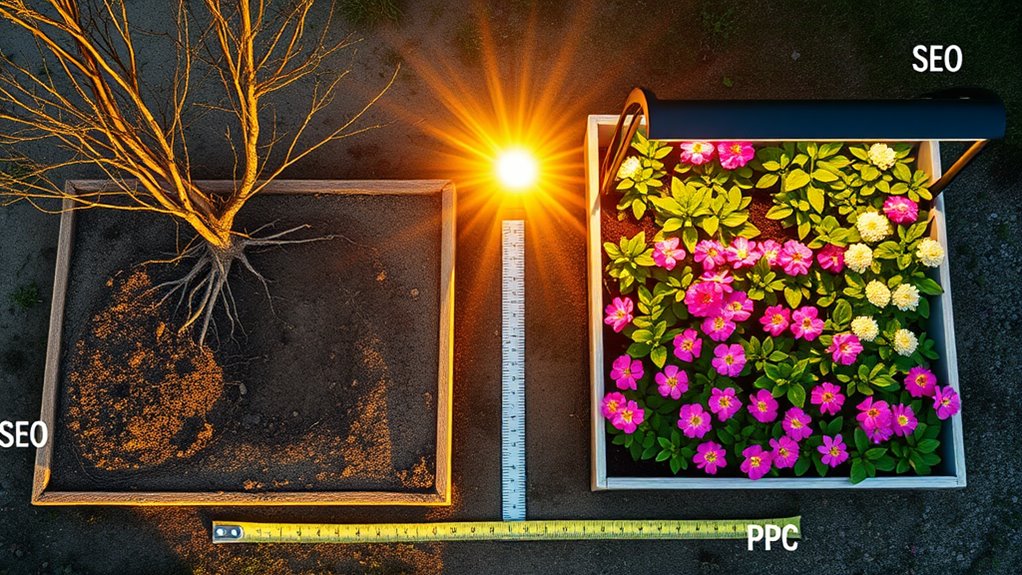
Comparing long-term and short-term benefits reveals fundamental differences between SEO and PPC strategies. Each approach serves distinct business objectives, with varying returns on your investment over time.
Long-Term Benefits:
- SEO creates lasting organic visibility that continues performing after you've stopped actively working on it
- Your content remains searchable and valuable for years, building domain authority
- Organic traffic typically converts 2-3 times better than paid traffic
- Cost per acquisition decreases over time as rankings improve
Short-Term Benefits:
- PPC delivers immediate visibility and trackable results
- You can test messaging and targeting quickly to optimize campaigns
- Campaigns can be scaled up or down based on real-time performance
- Perfect for time-sensitive promotions and seasonal offerings
Investment Comparison:
- SEO requires higher upfront investment but lower long-term costs
- PPC needs continuous funding to maintain visibility
- Your SEO efforts compound over time, while PPC stops immediately when you pause spending
- Industry data shows that after 12 months, SEO typically delivers 5-7 times more traffic value compared to equivalent PPC spending
Choose your strategy based on your business timeline, budget constraints, and marketing objectives.
Conclusion
Think of SEO and PPC as two paths up the same mountain of online visibility. You're like a climber who can choose the steady, enduring route of SEO that builds strength over time, or take the express lift of PPC for immediate views. While each path has its merits, you'll find the most success by strategically using both – letting SEO build your foundation while PPC gives you quick wins when needed.