
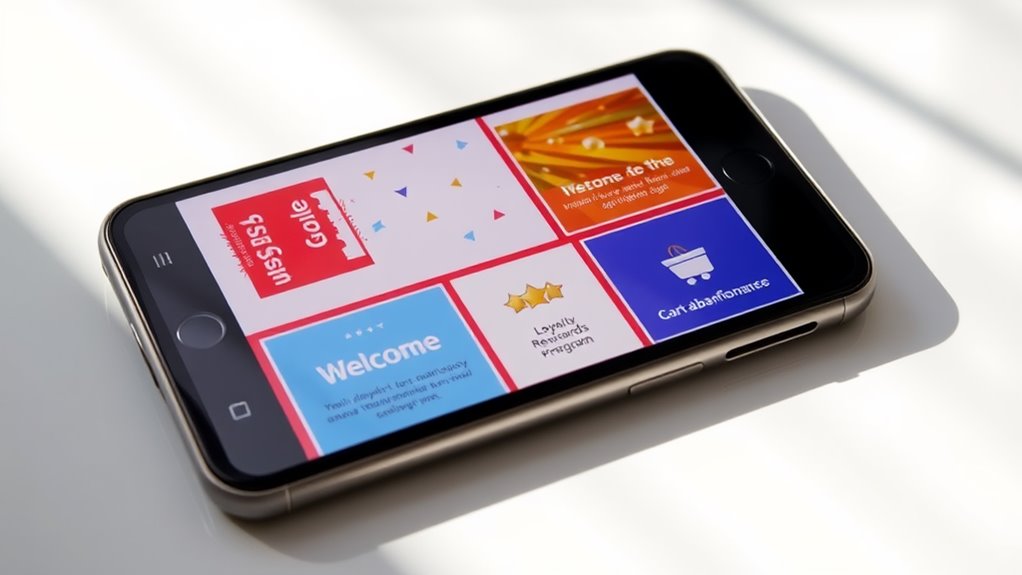
The four main types of email marketing campaigns serve distinct purposes in your customer communication strategy. Newsletters keep your audience informed with regular updates, content, and company news on a consistent schedule. Promotional emails drive sales through specific offers, products, and time-sensitive deals, typically featuring clear call-to-action buttons. Transactional messages are automated responses triggered by customer actions, like order confirmations and shipping updates. Lead nurturing sequences build relationships with potential customers through targeted content that guides them through your sales funnel. Understanding how to effectively implement each type will strengthen your overall marketing strategy.
Key Takeaway
- Newsletter campaigns deliver regular company updates, industry news, and educational content through scheduled communications, typically weekly or monthly.
- Promotional emails focus on driving sales through time-sensitive offers, product launches, and special discounts with clear calls-to-action.
- Transactional emails are automated messages triggered by specific customer actions, such as order confirmations, shipping updates, and account notifications.
- Lead nurturing sequences guide potential customers through the sales funnel with targeted content and personalized messaging over time.
- Welcome emails, a subset of transactional messages, introduce new subscribers to your brand and set expectations for future communications.
Understanding Email Marketing Basics
Key Components You Need to Know:
- Email List Management: You're responsible for building and maintaining a quality subscriber database while ensuring proper segmentation
- Content Strategy: You'll need to develop relevant, valuable content that addresses your audience's specific needs
- Deliverability: You must maintain sender reputation and follow anti-spam regulations
Essential Metrics to Track:
- Open Rate: Industry average hovers around 21.33%
- Click-through Rate (CTR): Typical rates range from 2-5%
- Conversion Rate: You should aim for 2-5% depending on your industry
- Bounce Rate: Keep it under 2% for ideal performance
You'll want to implement these fundamentals before diving into advanced strategies:
- Set clear campaign objectives
- Choose the right email marketing platform
- Design mobile-responsive templates
- Develop a consistent sending schedule
- Test different elements regularly
Newsletter Campaigns
Newsletter campaigns serve as the backbone of consistent email marketing communication, delivering regular updates, valuable content, and company news directly to your subscribers' inboxes. You'll want to establish a predictable sending schedule, whether weekly, bi-weekly, or monthly, to maintain engagement and build anticipation among your readers.
Key Components of Effective Newsletters:
- A compelling subject line that achieves 40-50% open rates
- Segmented content based on subscriber preferences
- A balanced mix of educational and promotional material (80/20 ratio)
- Clear calls-to-action strategically placed throughout
Your newsletter's structure should follow a consistent template that includes:
- Featured article or main story
- Industry updates or trends
- Company announcements
- Tips and how-to content
- Curated resources
When crafting your newsletter, you'll need to maintain brand consistency while providing genuine value. Studies show that newsletters with personalized content sections see 14% higher click-through rates than generic ones. Remember to optimize your layout for both desktop and mobile viewing, as 61% of emails are now opened on mobile devices. Track metrics like engagement rates and click patterns to continuously refine your strategy.
Promotional Emails
Unlike regular newsletters, promotional emails serve a direct revenue-generating purpose by showcasing specific products, services, or time-sensitive offers to drive immediate action from subscribers.
Key Components of Promotional Emails:
- Clear call-to-action buttons (typically 1-2 per email)
- Limited-time offers with countdown timers
- Product images and pricing details
- Personalized recommendations based on browsing history
- Mobile-optimized design elements
When you're crafting promotional emails, you'll want to focus on creating urgency while maintaining value for your subscribers. Studies show that promotional emails with deadlines generate 30% higher click-through rates than those without time constraints.
Best Practices for Implementation:
- Keep your subject lines under 50 characters
- Position your primary offer above the fold
- Include social proof through customer reviews
- Use segmentation to target specific customer groups
- Test different discount structures (percentage vs. dollar amount)
You'll find that promotional emails work best when they're part of a broader campaign strategy. By coordinating these messages with your other marketing channels, you can create a cohesive customer experience that drives conversions while building brand loyalty.
Transactional Messages
Through automated triggers, transactional messages deliver essential information to customers after specific actions or events occur on your platform. These emails typically generate higher open rates, averaging 40-50%, compared to regular marketing emails due to their time-sensitive, relevant nature.
Key Components of Transactional Messages:
- Order confirmations and shipping updates
- Account creation notifications
- Password reset instructions
- Subscription renewals
- Receipt and invoice delivery
- Appointment confirmations
- Service status updates
Best Practices for Implementation:
- Set up immediate delivery triggers
- Include clear call-to-action buttons
- Maintain brand consistency
- Personalize content based on user data
- Guarantee mobile responsiveness
You'll want to leverage these messages for additional marketing opportunities while keeping promotional content below 20% of the email. For instance, when sending an order confirmation, you can include personalized product recommendations or a discount code for future purchases.
To maximize effectiveness, integrate your transactional messaging system with your CRM platform. This integration enables real-time data synchronization and guarantees your customers receive accurate, timely information while maintaining compliance with email regulations.
Lead Nurturing Sequences

While transactional emails respond to specific customer actions, lead nurturing sequences build relationships with potential customers over time. These automated email series guide prospects through your sales funnel, delivering relevant content based on their behavior and interests.
Key Components of Lead Nurturing Sequences:
- Welcome series: Introduces your brand and sets expectations
- Educational content: Shares valuable insights about your industry
- Product information: Highlights features and benefits
- Social proof: Incorporates testimonials and case studies
- Conversion-focused messages: Includes targeted calls-to-action
You'll want to structure your sequences based on prospect engagement levels:
Early Stage:
- Industry insights and thought leadership
- Free resources and downloadable content
- Basic problem-solving information
Middle Stage:
- Product comparisons and detailed solutions
- Customer success stories
- Exclusive webinar invitations
Late Stage:
- Product demonstrations
- Limited-time offers
- Direct sales conversations
Research shows that nurtured leads make 47% larger purchases than non-nurtured leads. To maximize effectiveness, segment your audience based on behavior triggers, and maintain consistent timing between emails, typically 4-7 days apart.
Best Practices for Success
Successful email marketing campaigns rely on fundamental best practices that consistently drive results. To maximize your campaign's effectiveness, you'll need to implement proven strategies that enhance engagement and conversion rates.
Key Best Practices:
- Segment your email lists based on demographics, behavior, and preferences
- Create compelling subject lines that achieve 40-50% open rates
- Optimize send times according to your audience's peak activity periods
- Maintain mobile responsiveness, as 60% of emails are opened on mobile devices
Implementation Guidelines:
- Keep your content scannable with clear headlines and short paragraphs
- Include one primary call-to-action per email
- Test different elements through A/B testing
- Clean your email list regularly to maintain engagement metrics
You'll want to focus on personalization beyond just using the recipient's name. Instead, tailor content based on their past interactions, purchase history, and browsing behavior. Studies show that personalized emails deliver 6x higher transaction rates.
Remember to maintain consistency in your sending schedule and brand voice. You're building a relationship with your audience, so each email should reinforce your brand's value proposition while respecting your subscribers' inbox space.
Future of Email Marketing
Building on these proven best practices, email marketing continues to evolve with emerging technologies and changing consumer behaviors. You'll need to adapt your strategies to stay competitive in this rapidly changing landscape.
Key Trends Shaping Email Marketing's Future:
– AI-Powered Personalization
You'll see increasingly sophisticated AI algorithms that analyze customer behavior patterns to deliver hyper-personalized content and product recommendations at scale.
– Interactive Elements
Your emails will become more engaging with AMP technology, allowing subscribers to take actions directly within messages, such as completing purchases or booking appointments.
– Privacy-First Approach
With stricter data protection regulations, you'll need to focus on first-party data collection and transparent privacy practices to maintain customer trust.
– Mobile Optimization
More than 60% of email opens now occur on mobile devices, making responsive design and mobile-first strategies essential for your campaigns.
– Integration with Other Channels
You'll need to seamlessly connect your email marketing with social media, SMS, and other digital touchpoints for a cohesive omnichannel experience.
These developments will transform how you reach and engage your audience, making email marketing more dynamic and results-driven than ever before.
Conclusion
Just like a well-orchestrated symphony needs all its instruments, successful email marketing requires mastering all four types: newsletters, promotional emails, transactional messages, and lead nurturing sequences. You'll find that implementing these strategies systematically, while following best practices, will transform your marketing efforts. As email continues evolving, you're now equipped to create campaigns that engage, convert, and build lasting customer relationships.