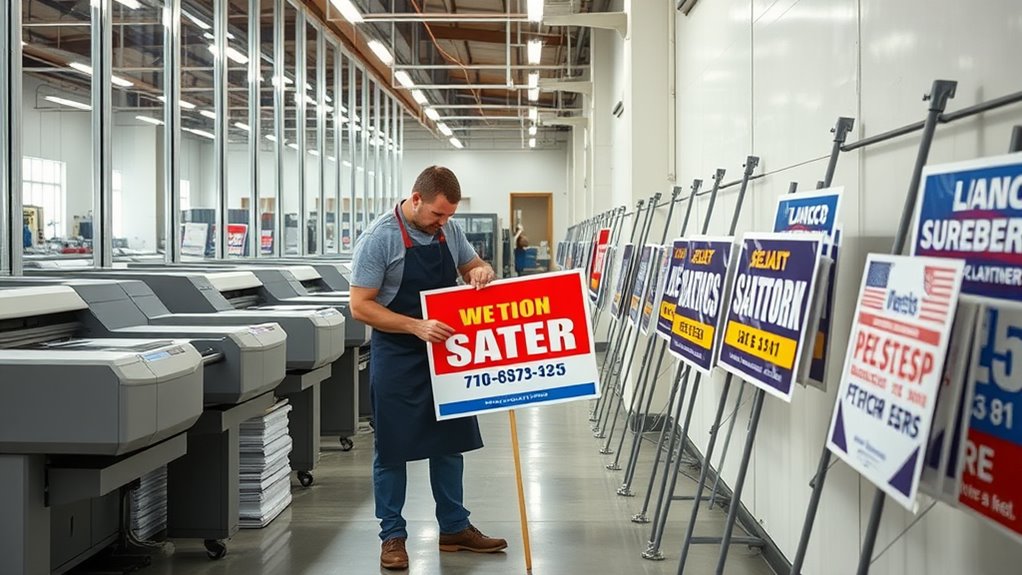

Yard signs are most commonly made from corrugated plastic (Coroplast), which accounts for 75% of temporary outdoor signage due to its lightweight, water-resistant properties and affordable price point of $2-5 per square foot. You'll also find signs made from aluminum composite material (ACM) for premium durability, high-density polyethylene (HDPE) for moderate durability, and traditional wooden constructions for a classic look. While Coroplast typically lasts 6-24 months outdoors, ACM signs can endure 3-5 years, and HDPE signs last 2-4 years. Each material offers unique benefits regarding weather resistance, print quality, and cost-effectiveness – factors that'll shape your ideal choice for specific signage needs.
Key Takeaway
- Corrugated plastic (Coroplast) is the most common yard sign material, featuring two flat sheets with internal fluting for lightweight and water-resistant properties.
- Aluminum composite material (ACM) offers premium durability with weather resistance and excellent print adhesion, lasting 3-5 years outdoors.
- High-density polyethylene (HDPE) provides impact resistance and UV protection, with a moderate outdoor lifespan of 2-4 years.
- Traditional wooden signs use weather-resistant, kiln-dried lumber with protective coatings that require resealing every 2-3 years.
- Most yard signs include metal stakes or support systems for installation, with H-stakes being the most common for corrugated plastic signs.
Common Materials in Modern Signs
Modern yard signs come in a variety of durable materials designed to withstand outdoor conditions. You'll find that today's signage manufacturers primarily use these innovative materials to create long-lasting displays for your property.
Primary Sign Materials:
- Corrugated Plastic (Coroplast)
- Lightweight yet sturdy
- Water-resistant composition
- Typical thickness: 4mm to 6mm
- Lifespan: 6-24 months outdoors
- Aluminum Composite Material (ACM)
- Premium durability
- Weather-resistant construction
- Standard thickness: 3mm to 6mm
- Lifespan: 3-5 years outdoors
- High-Density Polyethylene (HDPE)
- Impact-resistant properties
- UV-stabilized material
- Common thickness: 3mm to 9mm
- Lifespan: 2-4 years outdoors
You'll notice that each material offers specific advantages for your signage needs. Coroplast provides cost-effectiveness for temporary displays, while ACM delivers professional-grade durability for long-term installations. HDPE strikes a balance between the two, offering mid-range durability at a moderate price point. When selecting your sign material, consider factors like weather exposure, display duration, and budget requirements.
Corrugated Plastic Signs
Among all sign materials, corrugated plastic stands out as the most popular choice for yard signs. You'll find this versatile material, also known as coroplast, in about 75% of temporary outdoor signage due to its exceptional blend of durability and affordability.
Key Benefits of Corrugated Plastic Signs:
- Weather-resistant structure that withstands rain, wind, and UV rays
- Lightweight design (typically 4mm thick) for easy transportation and installation
- Cost-effective pricing at $2-5 per square foot
- Recyclable composition that's environmentally responsible
Construction and Features:
You'll notice that corrugated plastic consists of two flat sheets connected by internal fluting, creating a strong yet lightweight structure. The material's hollow channels allow you to insert H-stakes or wire stands directly into the sign, making installation quick and straightforward.
Printing and Customization Options:
- Direct digital printing for vibrant, fade-resistant graphics
- Screen printing for large-volume orders
- Available in standard sizes (18"x24", 24"x36")
- Custom shapes and sizes through die-cutting
- Double-sided printing capability for maximum visibility
You can expect these signs to last 6-24 months outdoors, depending on weather conditions and exposure levels.
Metal and Aluminum Options
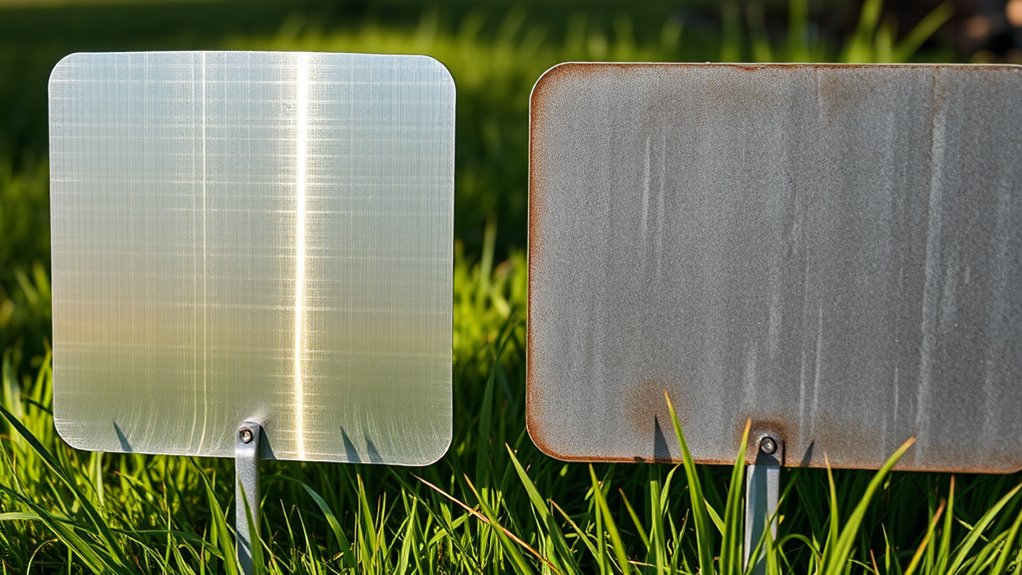
Metal signs represent the premium choice for yard signage when durability is paramount. You'll find that aluminum and galvanized steel options offer exceptional longevity, often lasting 5-10 years with proper maintenance. These materials provide superior weather resistance and maintain their appearance through harsh conditions.
When you're selecting metal yard signs, you'll encounter several premium features:
- Aluminum composite panels (ACM) combine two aluminum sheets with a polyethylene core, offering rigidity at just 1/3 the weight of solid metal
- Powder-coated steel provides enhanced rust resistance and allows for vibrant, long-lasting color options
- Reflective aluminum signs incorporate prismatic materials that increase visibility by up to 400% in low-light conditions
You'll need to take into account that metal signs typically cost 40-60% more than corrugated plastic alternatives. However, their durability often justifies the investment, especially in commercial applications. The material's strength allows for larger formats without sagging, and you can expect excellent print adhesion using UV-cured inks or vinyl applications. When you're planning for long-term outdoor display, metal signs deliver outstanding value through their extended service life and minimal maintenance requirements.
Traditional Wooden Sign Construction
Traditional wooden signs provide a classic, rustic appeal that's particularly well-suited for residential and historic settings. You'll find these signs commonly crafted from weather-resistant woods like cedar, redwood, or pressure-treated pine, each offering distinct advantages for outdoor durability.
Key Construction Elements:
- Base Material: 3/4-inch to 1-inch thick lumber, kiln-dried to prevent warping
- Protective Coatings: Marine-grade sealants or UV-resistant polyurethane
- Paint Options: Oil-based or exterior latex with primers
- Hardware: Stainless steel or galvanized mounting brackets
When you're constructing a wooden yard sign, you'll want to take into account these essential steps:
- Select wood that's been properly seasoned (moisture content below 15%)
- Sand surfaces thoroughly to 150-grit smoothness
- Apply wood preservative before painting
- Use exterior-grade paint with at least two coats
You'll need to factor in maintenance requirements, as wooden signs typically need resealing every 2-3 years. While they're more labor-intensive than modern alternatives, wooden signs can last 7-10 years with proper care and offer the flexibility to create custom shapes through routing or carving.
Weather-Resistant Materials and Coatings
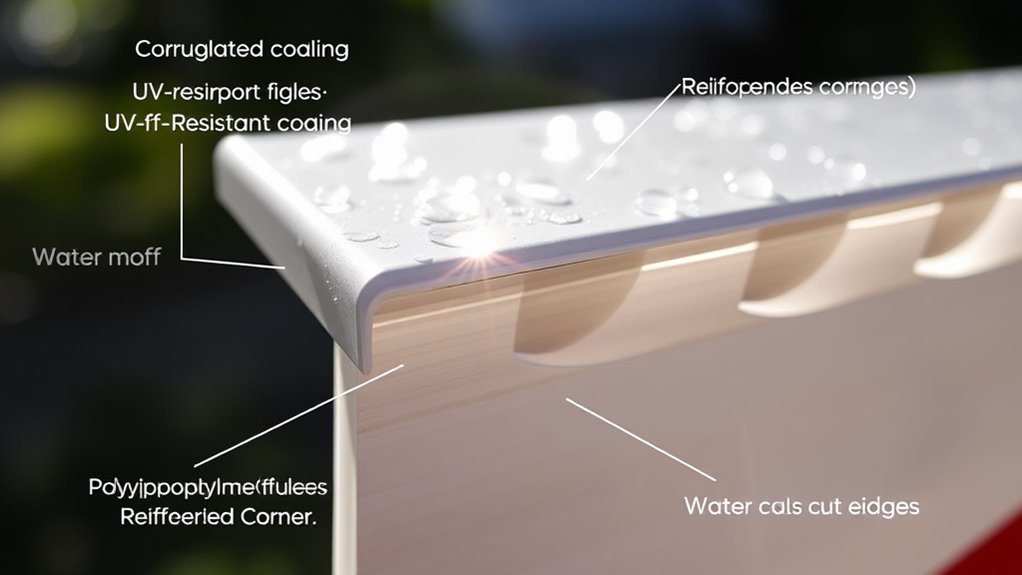
Durability stands as the primary consideration when selecting weather-resistant materials and protective coatings for yard signs. When you're investing in outdoor signage, you'll need materials that can withstand UV rays, rain, snow, and temperature fluctuations.
Modern weather-resistant options offer significant advantages over traditional materials, with innovations in synthetic compounds leading the way. You'll find these cutting-edge materials deliver superior performance:
- Corrugated plastic (Coroplast) with UV-resistant additives, offering 2-3 years of outdoor durability while remaining lightweight and cost-effective
- High-density polyethylene (HDPE) featuring integrated UV stabilizers, providing 5+ years of fade resistance and exceptional impact strength
- Aluminum composite materials (ACM) with fluoropolymer coatings, ensuring 10+ years of weather protection and structural integrity
To maximize your sign's lifespan, you'll want to contemplate applying additional protective measures. Modern nano-ceramic coatings can add 30-40% more durability to your existing materials, while anti-graffiti laminates protect against vandalism and environmental damage. These advanced coatings form a molecular bond with the substrate, creating a virtually impenetrable barrier against moisture and UV degradation.
Sign Stakes and Support Systems
While protecting your sign from weather is essential, even the most durable materials need proper support to remain upright and visible. Your choice of stake or support system will greatly impact your sign's stability and longevity.
Common Support Options:
- H-stakes: These metal supports feature a dual-prong design that offers excellent stability in most soil conditions, typically extending 8-10 inches into the ground.
- Step stakes: You'll find these easy to install with their built-in foot plate, making them ideal for temporary signage.
- Wire stakes: When you need flexibility and cost-effectiveness, these lightweight options work well for small to medium signs.
Installation Considerations:
- Soil type: You'll want heavier stakes for sandy or loose soil.
- Wind exposure: Consider using multiple stakes for signs in open areas.
- Height ratio: Your stake should be at least 1/3 of the sign's total intended height underground.
- Material compatibility: Confirm your stakes match your sign's material weight and dimensions.
For ideal performance, you'll need to check that your stakes are rust-resistant and properly coated. Most professional-grade stakes come in galvanized steel or powder-coated options, offering years of reliable support.
Printing Methods and Inks
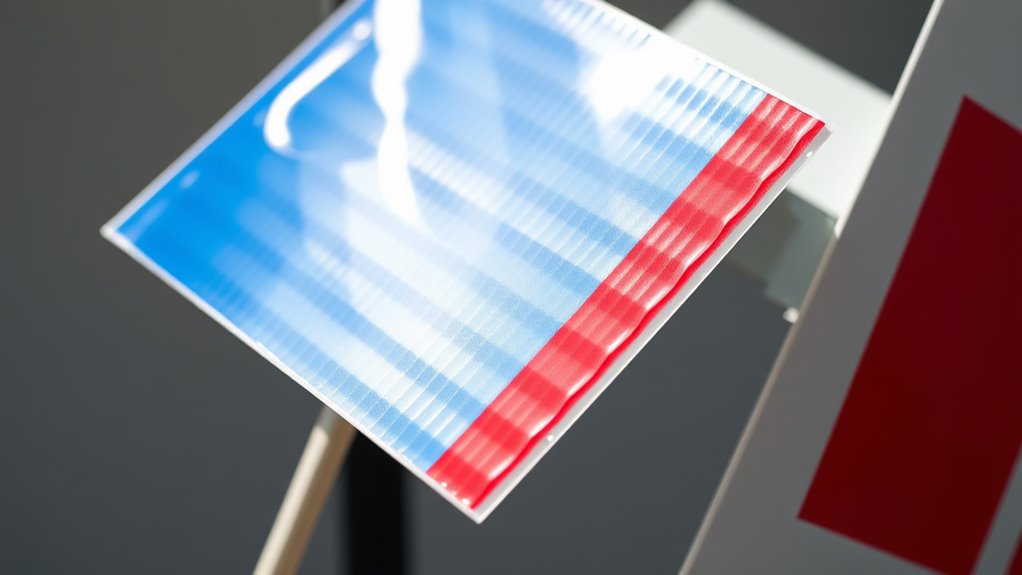
Selecting the right printing method and ink combination guarantees your yard signs deliver maximum visual impact and weather resistance. When you're ready to print your design, you'll encounter several modern techniques that combine durability with vibrant color reproduction.
Today's most effective yard sign printing methods include:
- Digital UV printing, which offers you photo-quality results and protects against sun damage, achieving up to 5 years of outdoor durability
- Screen printing, delivering cost-effective solutions for large quantities while providing excellent ink saturation and coverage
- Direct thermal transfer, ensuring precise detail reproduction and allowing for metallic or specialty ink options
You'll want to evaluate UV-resistant inks specifically formulated for outdoor use, as they'll maintain color integrity 40% longer than standard inks. For maximum durability, you can opt for solvent-based inks that chemically bond with corrugated plastic substrates. These inks won't crack, peel, or fade even in harsh weather conditions.
When you're selecting your printing method, remember that double-sided printing typically requires a 15-20% premium but doubles your sign's visibility and effectiveness in high-traffic areas.
Conclusion
You'll find that modern yard signs have evolved considerably from their wooden predecessors, with corrugated plastic (Coroplast) now dominating nearly 65% of the temporary signage market. Whether you're promoting a business, supporting a cause, or marking an event, you've got durable options ranging from aluminum to weather-treated wood. Remember to take into account your local climate and display duration when selecting materials, as they'll directly impact your sign's longevity and effectiveness.