
The key differences between template and custom websites come down to flexibility, cost, and timeline. You'll find template sites offer 30-100 preset design elements with limited customization, but they're quick to launch (1-7 days) and cost-effective ($10-30 monthly hosting). Custom websites provide unlimited design possibilities and tailored functionality, though they require longer development (3-6 months) and higher investment ($30-200 monthly hosting, plus development costs). While templates restrict structural changes and offer standardized support, custom sites allow proprietary features and personalized assistance. Understanding these distinctions will help determine which option best aligns with your business goals.
Key Takeaway
- Template websites offer 30-100 preset designs with limited customization, while custom websites provide unlimited design possibilities and creative freedom.
- Custom websites take 3-6 months to launch, whereas template websites can be ready in 2-4 weeks.
- Template maintenance costs $50-200 monthly, while custom websites require $100-300 monthly plus specialized development support.
- Custom websites allow for unique features and complex integrations, while templates restrict users to built-in functionalities.
- Template websites use standardized support systems, while custom websites receive dedicated technical support with faster response times.
Design Flexibility and Control
When it comes to design flexibility and control, template and custom websites offer distinctly different experiences. With templates, you're working within predetermined frameworks that limit your creative options and force you to adapt your vision to existing layouts.
Key Differences in Design Control:
- Template Websites
- You'll have access to 30-100 preset design elements
- Your customization is restricted to the template's built-in options
- You must work within fixed grid systems and layouts
- Color schemes and typography choices are often limited
- Custom Websites
- You'll have unlimited design possibilities
- Your developer can create any functionality you envision
- You're free to implement unique brand elements
- Every aspect can be tailored to your specific needs
While templates offer quick solutions, they're like trying to fit a square peg into a round hole when your brand requires distinct features. Custom websites, however, give you complete control over every pixel, allowing you to create truly unique user experiences. You'll have the freedom to adjust layouts, implement specific functionality, and modify design elements as your business evolves, without being constrained by template limitations.
Initial Costs and Maintenance
Template Websites:
- Monthly hosting fees: $10-30
- Theme updates: Often included
- Plugin costs: $15-50 per month
- Basic maintenance: $50-200 monthly
- Platform subscription: $20-100 monthly
Custom Websites:
- Hosting fees: $30-200 monthly
- Custom code updates: $100-500 per update
- Security maintenance: $100-300 monthly
- Feature additions: $500-5,000 per feature
- Developer retainer: $200-1,000 monthly
You'll need to factor in long-term costs beyond the initial build. While templates offer predictable, lower maintenance expenses, custom websites require specialized support and updates. However, you'll gain more control over maintenance scheduling with a custom site, as you're not dependent on template providers' update cycles or third-party developers' timelines.
Time to Launch
Considering launch timelines, you'll find significant differences between template and custom website development schedules. The speed at which you can deploy each type of website varies dramatically, impacting your business's digital presence timeline.
Template Website Launch Times:
- Quick setup: 1-7 days for basic templates
- Moderate customization: 2-3 weeks with brand colors and content
- Content migration: Add 1-2 weeks if transferring existing content
- Total average timeline: 2-4 weeks from start to finish
Custom Website Launch Times:
- Discovery phase: 1-2 weeks for requirements gathering
- Design phase: 3-4 weeks for mockups and approvals
- Development phase: 6-12 weeks for coding and testing
- Content implementation: 2-3 weeks for population and optimization
- Total average timeline: 3-6 months from concept to launch
You'll need to weigh these timeframes against your business objectives and market demands. If you're launching a startup or need a quick market presence, templates offer significant time advantages. However, if you're developing a complex platform with unique functionalities, the extended timeline for custom development often proves worthwhile for long-term success.
Customization Capabilities
The depth of customization available through templates and custom websites represents a fundamental distinction between these two approaches.
Customization Capabilities:
Template Websites
- You'll have access to preset design elements and layouts that can be modified within specific parameters
- Your customization options typically include:
- Color schemes (usually 10-15 preset palettes)
- Font selections (generally 20-30 choices)
- Pre-built content blocks
- Basic layout adjustments
- You're restricted to the template's core framework, which limits structural changes
Custom Websites
- You'll enjoy unlimited design flexibility with:
- Unique layouts tailored to your exact specifications
- Custom functionality that matches your business processes
- Proprietary features that set you apart from competitors
- Your development team can implement:
- Advanced integrations with any third-party software
- Specialized user interfaces
- Complex database structures
- Custom animations and interactive elements
The key difference lies in your control over the final product. While templates offer quick customization within predetermined boundaries, custom websites provide complete creative freedom, allowing you to build exactly what you envision without technical constraints or design limitations.
Technical Support and Updates
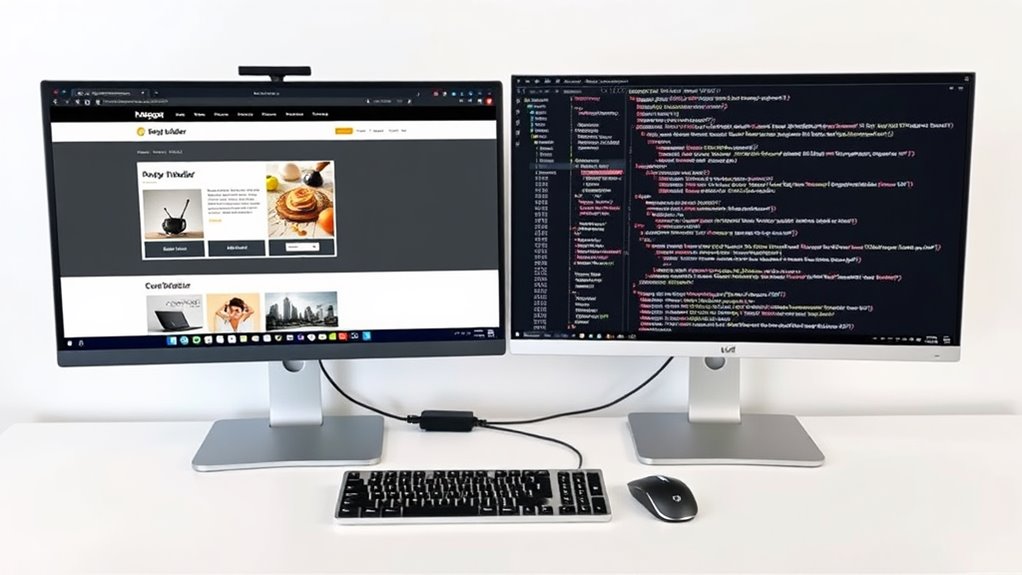
When maintaining your website becomes a priority, understanding the distinct support structures for template and custom websites proves essential. Let's examine how technical support and updates differ between these two options.
Template Website Support:
- You'll typically receive standardized support through help centers and community forums
- Platform providers push automatic updates for security and features
- Response times average 24-48 hours for basic support tickets
- You're limited to the platform's update schedule and feature rollouts
- Most template providers offer 24/7 chat support for common issues
Custom Website Support:
- Your development team provides personalized, targeted assistance
- Updates are scheduled according to your business needs
- Emergency support response times can be as quick as 1-2 hours
- You control when and how to implement security patches
- Maintenance costs are higher but offer greater flexibility
The key difference lies in control and specificity. With template websites, you're part of a larger ecosystem where updates and support follow predetermined patterns. Custom websites give you dedicated support and update flexibility, though you'll need to actively manage these aspects. Consider your technical requirements and support needs when choosing between these options.
Performance and Scalability
Just as support structures affect daily operations, website performance and scalability impact your long-term success. When comparing template and custom websites, you'll find significant differences in how they handle growth and traffic demands.
Performance Characteristics:
- Template websites typically load 20-30% slower due to pre-built features and excess code
- Custom websites allow for optimization of specific elements, resulting in faster load times
- Your template site might struggle with heavy traffic, while custom solutions can handle larger visitor volumes
Scalability Factors:
- Template limitations:
- Fixed functionality that's difficult to expand
- Pre-determined database structures
- Resource-sharing with other sites on shared hosting
- Custom advantages:
- Flexible architecture that grows with your business
- Optimized database design for your specific needs
- Ability to add features without compromising performance
You'll notice that custom websites offer better control over server resources and can be scaled vertically or horizontally as needed. While templates may serve well initially, they often hit performance ceilings as your traffic increases. Custom solutions, though requiring more upfront investment, provide long-term scalability that adapts to your evolving business needs.
Conclusion
Like choosing between a ready-made suit and a tailored one, your decision between template and custom websites depends on your specific needs and resources. You'll find that template sites offer quick, budget-friendly solutions when you're starting out, while custom websites give you complete creative control and scalability for growth. Consider your long-term goals, budget, and timeline carefully, as your choice will shape your digital presence for years to come.