
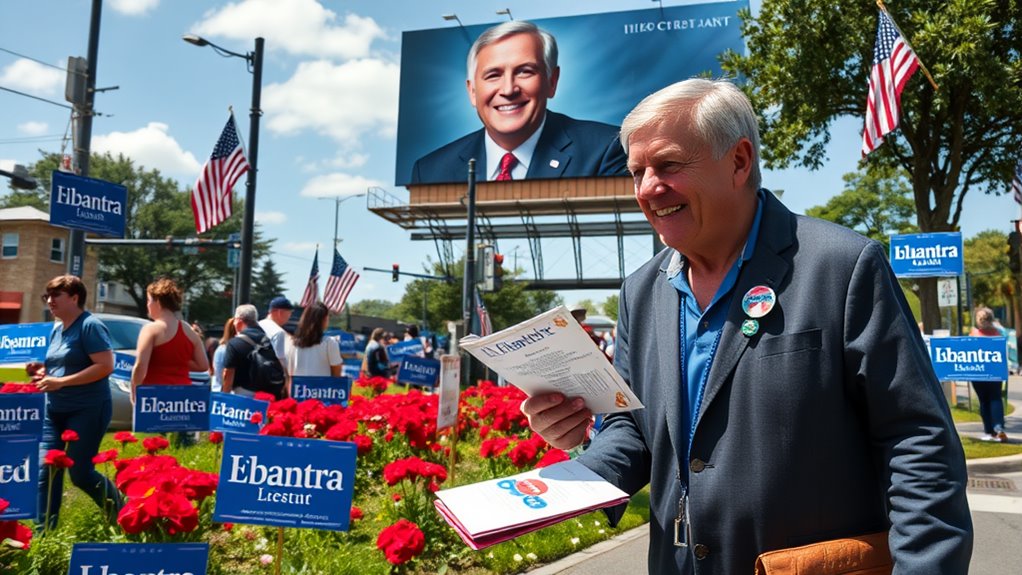
Political campaign marketing combines traditional and digital strategies to reach and influence voters effectively. You'll find campaigns utilizing a multi-channel approach that includes social media (Facebook, Twitter, Instagram), email marketing, TV ads, radio spots, and direct mail. Modern campaigns allocate roughly 30-40% of budgets to digital marketing, 25-35% to traditional media, and the remainder to ground operations and analytics. Data-driven targeting lets campaigns personalize messages for different voter segments, with response rates ranging from 5-9% for direct mail and 89% reach for TV ads among voters 35+. Understanding these marketing fundamentals can transform your approach to political campaigning.
Key Takeaway
- Political campaign marketing combines digital strategies like social media and email with traditional methods like TV, radio, and direct mail.
- Data-driven marketing uses voter analytics and micro-targeting to deliver personalized messages to specific demographic segments.
- Multi-channel marketing distributes campaign messages across various platforms to maximize voter reach and engagement.
- Direct voter contact marketing includes door-to-door canvassing, campaign events, and community outreach programs.
- Brand-focused marketing maintains consistent messaging, visual identity, and campaign values across all communication channels.
Core Elements of Campaign Marketing
Several key elements form the foundation of effective political campaign marketing. You'll find these core components essential for building a successful political outreach strategy that connects with voters and drives engagement.
Essential Campaign Marketing Elements:
– Message Development
You'll need to craft a clear, compelling narrative that resonates with your target audience, incorporating your candidate's unique value proposition and key policy positions.
– Audience Segmentation
By dividing your voter base into specific demographics, you're able to tailor your messaging and outreach efforts more effectively, typically increasing engagement by 40-60%.
– Multi-Channel Distribution
You'll want to deploy your campaign message across various platforms:
- Digital advertising (social media, email, websites)
- Traditional media (TV, radio, print)
- Direct voter contact (door-to-door, phone banks)
- Campaign events and rallies
- Data-Driven Strategy
You must leverage voter data and analytics to:
- Track campaign performance metrics
- Identify swing voters
- Optimize resource allocation
- Adjust messaging in real-time
These elements work together to create a thorough marketing approach that you'll need to maintain throughout your campaign cycle, ensuring consistent messaging and voter engagement.
Digital Campaign Strategies
Digital tools have revolutionized modern political campaigns, offering unprecedented ways to reach and influence voters. You'll find that modern campaigns leverage data analytics, social media platforms, and targeted advertising to connect with specific voter demographics more effectively than ever before.
Today's digital campaign strategies require you to master these essential elements:
- Social Media Management – You'll need to maintain active presence across platforms like Facebook, Twitter, and Instagram, where you can share real-time updates and engage directly with constituents.
- Email Marketing Campaigns – You should segment your voter database and deliver personalized messages that resonate with different voter groups.
- Data Analytics Implementation – You'll want to utilize voter behavior tracking and predictive modeling to optimize your campaign messaging and resource allocation.
- Digital Advertising Strategy – You must coordinate targeted ads across search engines, social platforms, and relevant websites to maximize voter reach.
When you're developing your digital strategy, remember that integration is key. You'll need to guarantee your digital efforts align with traditional campaign elements while maintaining consistent messaging across all platforms. This multi-channel approach helps you create a cohesive campaign that resonates with modern voters.
Traditional Marketing in Politics
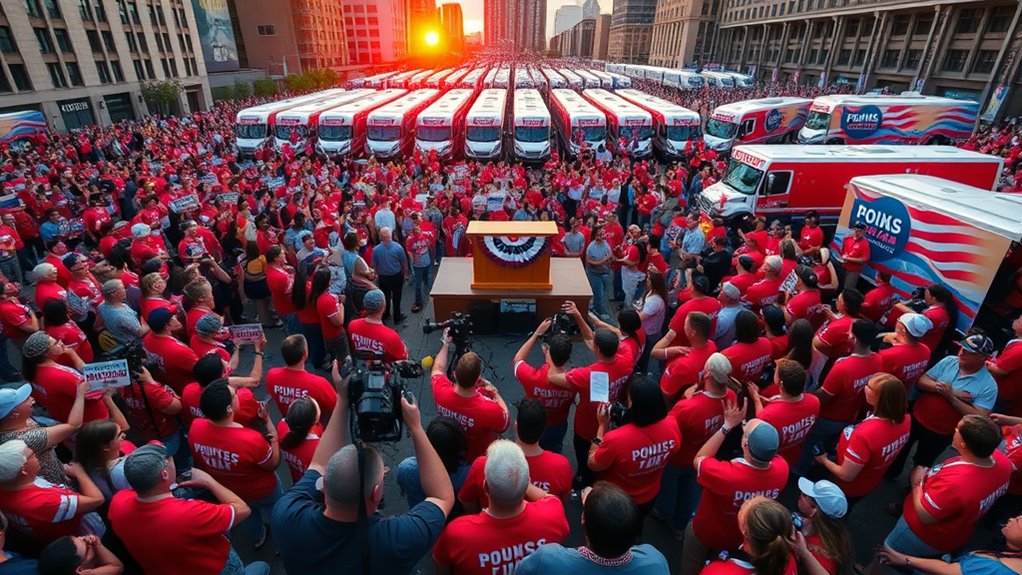
While modern campaigns embrace digital innovations, traditional marketing methods remain powerful tools in political outreach. You'll find these time-tested approaches continue delivering results across diverse voter demographics.
Key Traditional Marketing Methods:
- Direct Mail: You can reach 90% of households through targeted mailers, with response rates averaging 5-9% for political campaigns
- Television Ads: Despite streaming's rise, you'll still reach 89% of voters aged 35+ through traditional TV spots
- Radio Advertising: You're able to target specific demographics during drive times, reaching 92% of Americans weekly
- Print Media: You can establish credibility through newspaper endorsements and op-eds
- Campaign Signs: You'll maintain visibility in high-traffic areas with yard signs and billboards
Implementation Strategies:
- Coordinate your messaging across multiple traditional channels
- Time your mailings to coincide with early voting periods
- Place yard signs strategically in supporter neighborhoods
- Schedule radio spots during peak commuting hours
- Integrate traditional methods with your digital strategy
When you're planning your campaign, remember that traditional marketing creates tangible touchpoints voters can physically interact with, building trust and recognition in ways digital alone can't match.
Data-Driven Voter Targeting
- Micro-targeting allows campaigns to send you personalized messages based on your specific interests, concerns, and voting patterns
- Geographic information systems help optimize door-to-door canvassing routes, ensuring volunteers reach the right households
- Behavioral analytics predict which voters are most likely to change their minds or need additional outreach
- Real-time response tracking enables campaigns to adjust their messaging strategy based on your feedback and engagement levels
Message Development and Branding
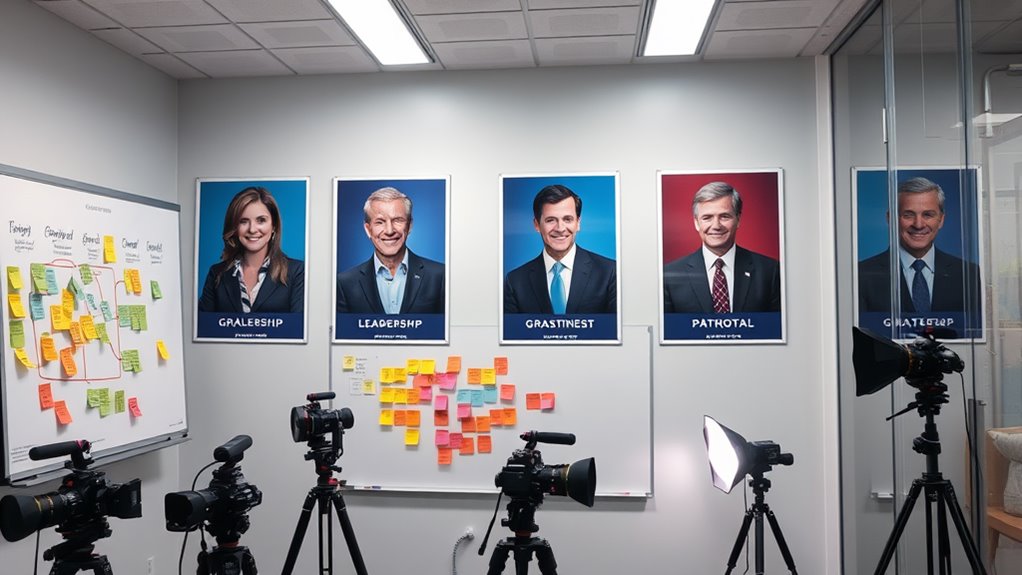
Effectiveness in political campaigns hinges on crafting a clear, compelling message that resonates with voters. As you develop your campaign's messaging strategy, you'll need to focus on creating a distinct brand identity that sets your candidate apart from competitors.
Key Message Development Components:
- Core narrative: Your campaign's central story and vision
- Value proposition: What makes your candidate uniquely qualified
- Policy positions: Clear stances on 3-5 priority issues
- Campaign slogan: A memorable phrase that captures your message
Branding Elements You'll Need:
- Visual identity (logos, colors, typography)
- Messaging hierarchy
- Tone of voice guidelines
- Key talking points
You'll want to test your messaging with focus groups and adjust based on feedback. Research shows that voters remember only 20% of political messaging, so you must keep your core message simple and repeat it consistently across all channels. Your brand should remain flexible enough to evolve with changing circumstances while maintaining its fundamental identity.
Remember to align your message with voter pain points and aspirations, using data from your targeting efforts to refine your communication strategy.
Campaign Budget Allocation
A successful political campaign requires strategic distribution of financial resources across multiple activities and channels. You'll need to carefully balance your spending across various marketing efforts to maximize voter reach and engagement while maintaining fiscal responsibility.
Modern campaign budgeting typically follows a data-driven approach, where you'll allocate funds based on voter demographics, geographical targeting, and historical performance metrics. Your budget planning should remain flexible enough to respond to changing campaign dynamics and emerging opportunities.
- Digital Marketing (30-40% of budget): Your social media advertising, email campaigns, and website optimization efforts should receive substantial investment, as they offer precise targeting and measurable results
- Traditional Media (25-35%): Television, radio, and print advertising still play significant roles in reaching certain voter demographics
- Ground Operations (20-25%): Door-to-door canvassing, campaign events, and volunteer coordination require significant resources
- Research and Analytics (10-15%): Polling, data analysis, and voter research help inform your strategic decisions
Remember to maintain a reserve fund (approximately 10%) for unexpected opportunities or challenges that may arise during the campaign cycle.
Social Media Campaign Tactics

Modern political campaigns rely heavily on social media platforms to reach and engage voters, with over 70% of Americans now using at least one social network daily. You'll need to implement these proven tactics to maximize your campaign's social media impact:
Key Platform Strategies:
- Create platform-specific content (Instagram for visuals, Twitter for quick updates, Facebook for detailed policy discussions)
- Schedule posts during peak engagement hours (typically 8-10 AM and 6-8 PM)
- Utilize paid advertising with demographic targeting
- Monitor and respond to constituent comments within 2-4 hours
Content Best Practices:
- Share behind-the-scenes campaign moments to build authenticity
- Post real-time updates from rallies and events
- Develop shareable infographics explaining your policy positions
- Launch live Q&A sessions to boost engagement
Analytics and Optimization:
You'll want to track these essential metrics:
- Engagement rates (aim for 3-5% minimum)
- Share and retweet velocity
- Comment sentiment analysis
- Follower growth rate
Remember to maintain consistent branding across all platforms while adapting your message tone to each network's unique audience expectations.
Conclusion
While you might feel overwhelmed by the complexities of political campaign marketing, you've now got the essential tools to understand this dynamic field. Despite concerns about information overload, you'll find that modern political marketing simply combines time-tested strategies with new digital innovations. By focusing on data-driven decisions, targeted messaging, and a balanced marketing mix, you're equipped to analyze and understand any political campaign's marketing approach.