
You can absolutely do SEO on Shopify, and the platform makes it quite accessible with its built-in features. Shopify provides essential SEO tools like customizable title tags, meta descriptions, automatic canonical tags, and XML sitemap generation. You'll have control over URL structures, image alt text, and mobile responsiveness through Shopify's default settings. The platform supports technical SEO best practices, including site speed optimization, schema markup implementation, and content marketing capabilities through its integrated blog feature. While Shopify handles many SEO basics automatically, understanding how to leverage these features will help you maximize your store's search visibility.
Key Takeaway
- Shopify provides built-in SEO features including customizable titles, meta descriptions, canonical tags, and automatic sitemap generation.
- Store owners can optimize product pages with keyword-rich titles, unique descriptions, and proper image alt text.
- Technical SEO is fully supported through mobile responsiveness, URL customization, schema markup, and site speed optimization tools.
- Content marketing capabilities include blogging features, buying guides, and user-generated content integration for improved rankings.
- Shopify allows complete control over backlink building through partnerships, guest posting, and creating linkable content assets.
Shopify's Built-in SEO Features
When it comes to e-commerce platforms, Shopify stands out with its extensive suite of built-in SEO tools. You'll find these features seamlessly integrated into your store's dashboard, making optimization straightforward and efficient.
Key Built-in SEO Features:
- Customizable title tags and meta descriptions for all pages
- Automatic canonical tags to prevent duplicate content issues
- Built-in sitemap.xml generation and robots.txt file
- Customizable URL structures and automatic 301 redirects
- Alt text fields for product images
- Mobile-responsive themes by default
You can access these features through your Shopify admin panel, where you'll find dedicated sections for SEO customization. The platform automatically generates clean URLs for your products and collections, while allowing you to modify them for better keyword optimization.
Technical Advantages:
- Fast loading speeds through Shopify's CDN network
- SSL certificates included with all stores
- Structured data markup for products
- Social media integration for enhanced visibility
You'll appreciate how these features work together to create a solid SEO foundation, though you'll still need to implement proper keyword research and content strategies to maximize their effectiveness.
Technical SEO Best Practices
Beyond Shopify's built-in features, implementing technical SEO best practices will greatly boost your store's search performance. To maximize your site's visibility, you'll need to focus on several critical technical aspects that search engines prioritize.
Key Technical SEO Elements:
- Site Speed Optimization
- Compress all images to under 100KB
- Minimize JavaScript and CSS files
- Enable browser caching
- Use Shopify's native lazy loading
- Mobile Responsiveness
- Test your store across multiple devices
- Guarantee touch elements are properly spaced
- Maintain readable font sizes (minimum 16px)
- URL Structure
- Create logical category hierarchies
- Use hyphens between words
- Keep URLs under 50-60 characters
- Schema Markup
- Implement product schema
- Add organization markup
- Include breadcrumb navigation schema
Technical SEO requires regular maintenance and monitoring. Use tools like Google Search Console to track your site's performance and identify technical issues promptly. Remember to regularly audit your site's robots.txt file and XML sitemap to guarantee proper crawling and indexing by search engines. Additionally, implement SSL security and maintain HTTPS protocol across all pages to boost search rankings.
Optimizing Product Pages
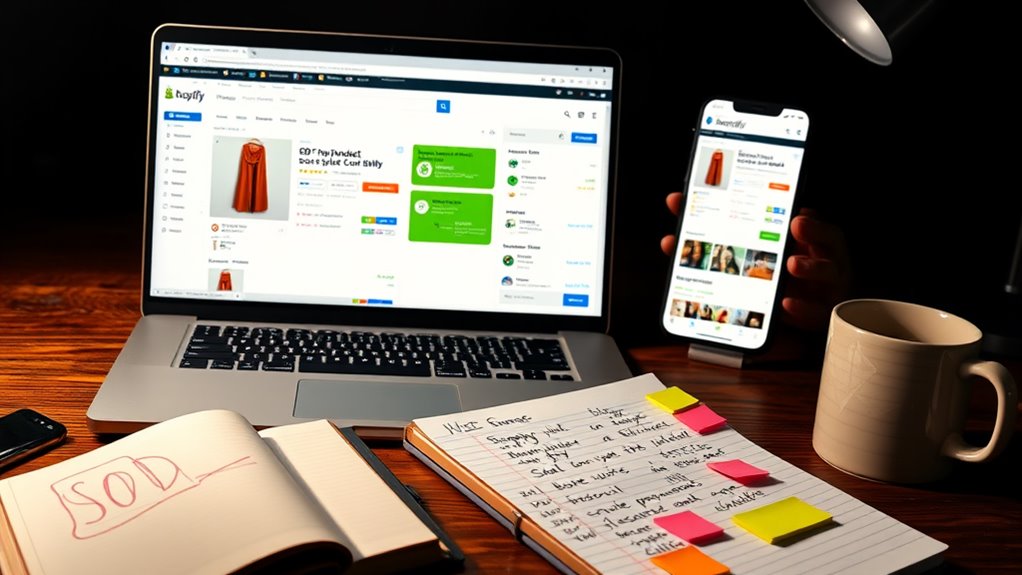
Optimization of product pages stands as the cornerstone of Shopify SEO success. You'll need to focus on several key elements to maximize your product pages' visibility and conversion potential.
Key Product Page Elements to Optimize:
- Product titles: Include your primary keyword within the first 60 characters, maintaining natural readability
- Meta descriptions: Craft unique, compelling 150-160 character descriptions for each product
- Image optimization: Use descriptive alt text and compress images to maintain fast loading speeds
- URL structure: Create clean, keyword-rich URLs that reflect your product hierarchy
Content Best Practices:
- Write unique product descriptions of at least 300 words
- Include technical specifications and key features in bullet points
- Integrate relevant long-tail keywords naturally throughout the content
- Add structured data markup for enhanced SERP visibility
Advanced Optimization Tips:
- Implement product schema markup to display pricing and availability in search results
- Create internal linking structures between related products
- Maintain consistent product categorization
- Include customer reviews to generate fresh, user-generated content
- Use breadcrumb navigation to improve site structure and user experience
Content Marketing For Shopify
Through effective content marketing, your Shopify store can attract organic traffic, build brand authority, and drive sales. Content marketing serves as a cornerstone of your SEO strategy by creating valuable resources that answer your customers' questions and position your brand as an industry leader.
To maximize your content marketing efforts on Shopify, focus on these proven strategies:
- Create a blog section that addresses your target audience's pain points, featuring how-to guides, product comparisons, and industry insights that naturally incorporate your keywords
- Develop detailed buying guides that showcase your expertise while linking to relevant product collections, increasing your internal linking structure
- Implement a content calendar that aligns with seasonal trends and shopping patterns, ensuring consistent publication of fresh, relevant content
- Leverage user-generated content, including customer reviews and testimonials, to enhance authenticity and provide social proof
Your content strategy should extend beyond product descriptions to include thorough resources that support your customers' buying journey. By consistently publishing high-quality, SEO-optimized content, you'll improve your store's visibility in search results while building lasting relationships with your audience through valuable information.
Building Quality Backlinks

Strong content marketing creates a foundation for your Shopify store's visibility, but quality backlinks amplify your reach exponentially. Building authoritative backlinks requires strategic outreach and valuable content that others want to reference.
Key Strategies for Quality Backlinks:
- Create linkable assets like industry studies, thorough guides, or original research that naturally attracts citations
- Develop partnerships with complementary businesses for mutual link exchanges
- Guest post on relevant industry blogs while maintaining strict quality standards
- Leverage social proof through customer testimonials and product reviews
Implementation Best Practices:
- Focus on earning links from sites with domain authority scores above 40
- Verify anchor text remains diverse and natural, avoiding over-optimization
- Target niche-specific directories and professional associations in your industry
- Monitor competitors' backlink profiles to identify new opportunities
You'll want to avoid common pitfalls like purchasing links or participating in link schemes that violate Google's guidelines. Instead, concentrate on building relationships with industry influencers and creating share-worthy content that naturally earns backlinks through its inherent value to your target audience.
Remember to regularly audit your backlink profile using tools like Ahrefs or SEMrush to maintain link quality and address any toxic backlinks promptly.
Conclusion
By implementing these SEO strategies on your Shopify store, you'll position yourself for greater visibility and success in the competitive e-commerce landscape. With studies showing that 68% of all online experiences begin with a search engine, your investment in Shopify SEO can dramatically impact your bottom line. Start with the basics, prioritize your technical foundation, and continuously optimize your content to stay ahead of your competitors and drive sustainable organic growth.