
To conduct a local SEO audit, you'll need to examine six core areas of your online presence. Start by analyzing your Google Business Profile for accuracy and completeness, including NAP details and category selections. Next, check your website's technical health, focusing on mobile responsiveness and page speed scores. Review your business listings across local directories to guarantee consistency, then assess your online reviews and response rates. Evaluate your on-page SEO elements, particularly location-specific keywords and meta descriptions. Finally, examine your local backlink profile and compare against competitors. Understanding these fundamentals will help you develop a thorough optimization strategy.
Key Takeaway
- Review Google Business Profile completeness, ensuring accurate NAP information, business hours, photos, and category selections are up-to-date.
- Analyze website technical health by checking site speed, mobile responsiveness, SSL certificates, and Core Web Vitals metrics.
- Audit local citations across directories to verify NAP consistency and remove duplicate listings using tools like Moz Local.
- Evaluate online review performance by tracking quantity, ratings, response rates, and comparing metrics against local competitors.
- Assess local backlink profile using tools like Ahrefs to identify quality links from community sources and regional organizations.
Google Business Profile Analysis
Conducting a thorough Google Business Profile analysis forms the foundation of any local SEO audit. Your business's digital storefront needs regular maintenance to guarantee maximum visibility in local search results and Maps listings.
Key Areas to Analyze:
- Profile completeness (business name, address, phone number)
- Category selection and attributes
- Business hours and special hours
- Photo quality and quantity
- Review management and response rate
Action Steps:
- Verify your NAP (Name, Address, Phone) consistency across all platforms
- Update business categories to match your primary and secondary services
- Upload high-quality photos monthly (minimum 3-4 new images)
- Monitor and respond to reviews within 24-48 hours
- Add complete service menus and product listings
You'll need to track these metrics monthly:
- Search visibility percentage
- Customer actions (calls, direction requests, website clicks)
- Photo views compared to competitors
- Review velocity and rating trends
- Q&A section engagement
Warning signs that require immediate attention:
- Sudden drops in visibility
- Unresolved negative reviews
- Outdated imagery
- Missing or incorrect business hours
- Unanswered Q&As
Website Technical Health Check
While Google Business Profile optimization sets the stage for local visibility, your website's technical health directly impacts how search engines crawl, index, and rank your pages in local search results. A thorough technical audit guarantees your site maintains peak performance for both users and search engines.
Key Technical Elements to Evaluate:
- Site Speed: Check your loading times using Google PageSpeed Insights, aiming for scores above 80/100 on both mobile and desktop versions
- Mobile Responsiveness: Test your site's adaptation across multiple devices, as 60% of local searches occur on mobile devices
- URL Structure: Guarantee clean, logical URLs with location-specific keywords when appropriate, such as "/services/chicago/"
- SSL Certificate: Verify HTTPS implementation, as it's now a significant ranking factor
- XML Sitemap: Maintain an updated sitemap that includes all your local landing pages
- Robots.txt: Configure proper crawling directives to guide search engines efficiently
- Schema Markup: Implement local business schema to provide search engines with structured data about your location, services, and hours
- Core Web Vitals: Monitor LCP, FID, and CLS metrics through Google Search Console to maintain peak user experience signals
Local Citations and Directories
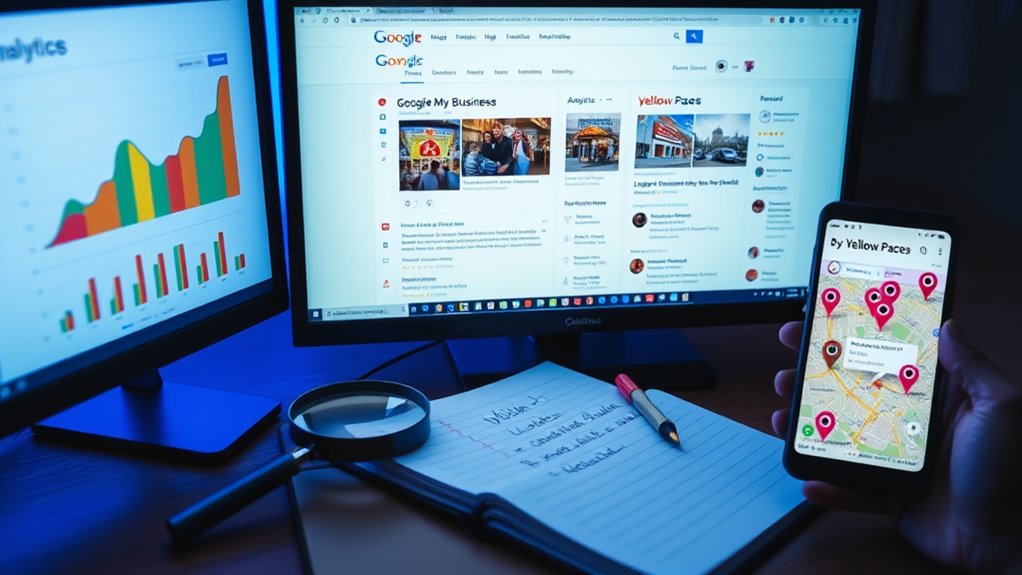
Building consistent local citations across 50+ online directories forms a critical foundation for local SEO success. Your business's Name, Address, and Phone Number (NAP) must remain identical across all platforms to bolster your local search presence and credibility with search engines.
Key Citation Sources to Audit:
- Google Business Profile (formerly GMB)
- Bing Places
- Apple Maps
- Yelp
- Yellow Pages
- Chamber of Commerce listings
- Industry-specific directories
Citation Audit Steps:
- Use citation tracking tools like Moz Local or BrightLocal to scan existing listings
- Document inconsistencies in your NAP data
- Create a spreadsheet to track all directory profiles
- Update or remove duplicate listings
- Add missing information to incomplete profiles
Best Practices:
- Confirm your business category matches across platforms
- Include high-quality photos and business descriptions
- Monitor and respond to customer reviews
- Add business hours and payment methods
- Verify your listings when possible
Your citation profile directly impacts local search rankings, making regular audits essential. Focus on quality over quantity, prioritizing authoritative directories relevant to your industry and location.
Online Reviews Assessment
Through the lens of local SEO, online reviews serve as powerful trust signals that influence both search rankings and consumer decisions. When evaluating your online reviews profile, you'll need to examine multiple factors that impact your local search visibility.
Key Review Evaluation Areas:
- Review quantity across platforms (Google Business Profile, Yelp, industry-specific sites)
- Overall rating score and review sentiment
- Review frequency and recency
- Response rate to customer feedback
- Review authenticity and compliance
Action Steps for Review Optimization:
- Track your review distribution across platforms using tools like BrightLocal or Grade.us
- Monitor your average rating, aiming for at least 4.0+ stars
- Implement a review generation strategy to maintain steady review flow
- Respond to 80% or more of your reviews within 48 hours
- Flag suspicious reviews that violate platform guidelines
You'll want to document review metrics monthly, comparing them against local competitors. This data helps identify gaps in your review strategy and opportunities for improvement. Remember to focus on Google Business Profile reviews first, as they carry the most weight for local search rankings.
On-Page Local SEO Elements
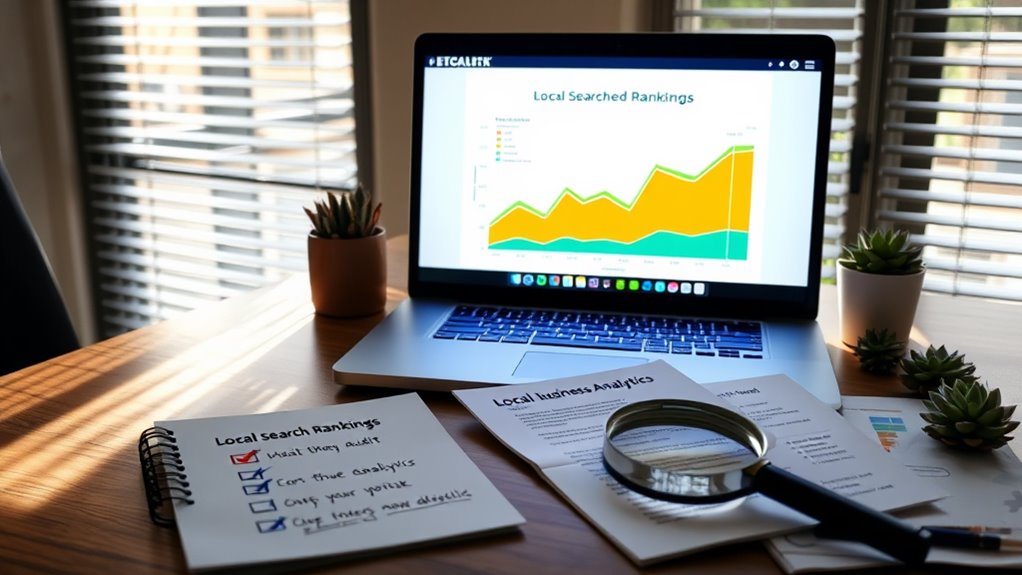
A strong local search presence requires more than just positive reviews – your website's on-page elements must clearly signal your local relevance to search engines. You'll need to optimize several essential components to maximize your local visibility.
Essential On-Page Local SEO Elements:
- Title Tags: Include your city and state alongside your business name and primary service (e.g., "Johnson Plumbing | Emergency Plumber | Portland, OR")
- Meta Descriptions: Incorporate location-specific keywords and your service area within your 155-character description
- Header Tags (H1-H6): Embed geographic terms naturally within your headers, especially your main H1 tag
- NAP Consistency: Display your business Name, Address, and Phone number prominently, ensuring it matches your Google Business Profile exactly
- Location-Based Content:
- Create unique pages for each service area you target
- Include neighborhood-specific information and landmarks
- Embed a Google Map showing your location
- Add schema markup with local business data
- URL Structure: Incorporate location terms in your URLs when relevant (e.g., "/portland-plumbing-services")
- Image Alt Text: Use geo-modified descriptions for relevant images (e.g., "plumber-fixing-sink-portland-oregon")
Competitor Benchmarking
Effective local SEO requires understanding your competition's digital footprint and performance. When you analyze your top local competitors, you'll uncover valuable insights about their strategies, strengths, and weaknesses. This analysis will help you identify opportunities to outperform them in local search results.
To conduct thorough competitor benchmarking, focus on these key areas:
- Citations and Directory Presence – Check where your competitors are listed, their NAP consistency, and which directories drive the most traffic to their websites
- Content Strategy Analysis – Examine their keyword targeting, local content themes, blog post frequency, and engagement metrics across various platforms
- Backlink Profile Assessment – Review their link-building strategies, local partnerships, and authority metrics using tools like Ahrefs or Moz
- Social Media Performance – Monitor their social engagement rates, review management practices, and local community interaction patterns
You'll want to track these metrics monthly and adjust your strategy accordingly. Remember to document your findings in a spreadsheet, making it easier to spot trends and opportunities. This data-driven approach will help you make informed decisions about resource allocation and strategy refinement.
Local Link Building Evaluation

Building links within your local community forms the backbone of a strong local SEO foundation. To evaluate your current local link building efforts, you'll need to assess several key components of your backlink profile.
Key Areas to Analyze:
- Chamber of Commerce and local business association memberships
- Local news website citations and mentions
- Community event sponsorships and partnerships
- Regional industry-specific directories
- Local business awards and recognition programs
Assessment Steps:
- Audit existing backlinks using tools like Ahrefs or Majestic to identify local referring domains
- Compare your local link ratio against competitors in your market
- Evaluate the authority of local linking domains using metrics like Domain Rating
- Check anchor text distribution for location-specific keywords
Quality Indicators:
- Links from .edu and .gov domains within your service area
- Citations from local media outlets
- Backlinks from regional business organizations
- References from local industry-specific blogs
You'll want to focus on acquiring links from websites within your service radius, maintaining a natural link velocity of 3-5 new local backlinks per month, while ensuring relevance to your business category and geographic location.
Conclusion
You've now got the essential tools to conduct a thorough local SEO audit that'll boost your business's visibility. With studies showing that 46% of all Google searches have local intent, you can't afford to ignore these optimization opportunities. By systematically working through each audit component, from your Google Business Profile to local link building, you'll identify gaps and create an actionable plan to outrank your local competitors.