
To start your local SEO journey, you'll need to focus on five essential steps. Begin by setting up and verifying your Google Business Profile with accurate business information, photos, and regular updates. Next, optimize your website by incorporating local keywords into your titles, meta descriptions, and content while creating location-specific landing pages. Build citations across major directories like Yelp and Yellow Pages, ensuring consistent business information everywhere. Actively generate and respond to customer reviews within 48 hours, and develop locally-focused content that resonates with your community. These foundational steps will set you up for stronger local search visibility, but there's much more to explore for maximum impact.
Key Takeaway
- Set up and verify a Google Business Profile with complete business information, photos, and regular updates to improve local visibility.
- Include location-specific keywords in your website's title tags, meta descriptions, and content with a focus on your city and services.
- Build citations by listing your business consistently across major directories like Yelp and Yellow Pages to boost local rankings.
- Actively collect and respond to customer reviews on Google Business Profile and other platforms to enhance local credibility.
- Create local-focused content about community events and area-specific topics while maintaining a 1-2% keyword density.
Setup Google Business Profile
One of the most essential steps in local SEO is setting up your Google Business Profile (formerly known as Google My Business). This free tool lets you manage how your business appears in Google Search and Maps, greatly impacting your local visibility.
To create an optimized Google Business Profile:
- Verify your business ownership through Google's verification process, typically using a postcard, phone, or email
- Input complete and accurate business information, including:
- Business name exactly as it appears on your storefront
- Physical address and service areas
- Phone number and website URL
- Business hours and holiday schedules
- Primary and secondary business categories
Keep your profile active and engaging by:
- Posting weekly updates about products, services, or events
- Responding to customer reviews within 24-48 hours
- Adding high-quality photos of your business, team, and products
- Updating seasonal hours and special announcements promptly
Monitor your profile's performance through Google's analytics dashboard, which shows:
- Search queries that lead to your business
- Customer actions (calls, website visits, direction requests)
- Photo views and engagement metrics
- Review statistics and response rates
Optimize Website for Local Keywords
After establishing your Google Business Profile, the next major step in local SEO involves optimizing your website with location-specific keywords. Your goal is to target searchers in your specific geographic area by incorporating city, neighborhood, and regional terms throughout your content.
Key Location Optimization Strategies:
- Include your city and state in title tags, meta descriptions, and H1 headers
- Create location-specific landing pages for each service area you target
- Embed your business address in the footer of every page
- Add location modifiers to your primary keywords (e.g., "dentist in Chicago")
Content Implementation Tips:
- Write unique content about local events, news, and community involvement
- Include neighborhood-specific testimonials from local customers
- Create locally focused blog posts (e.g., "Best Coffee Shops in Downtown Seattle")
- Use natural language when mentioning locations (avoid keyword stuffing)
Remember to maintain consistency between your website's NAP (Name, Address, Phone) information and your Google Business Profile. Track your rankings for local search terms using tools like Google Search Console, and adjust your strategy based on performance metrics and search trends in your area.
Build Local Citations
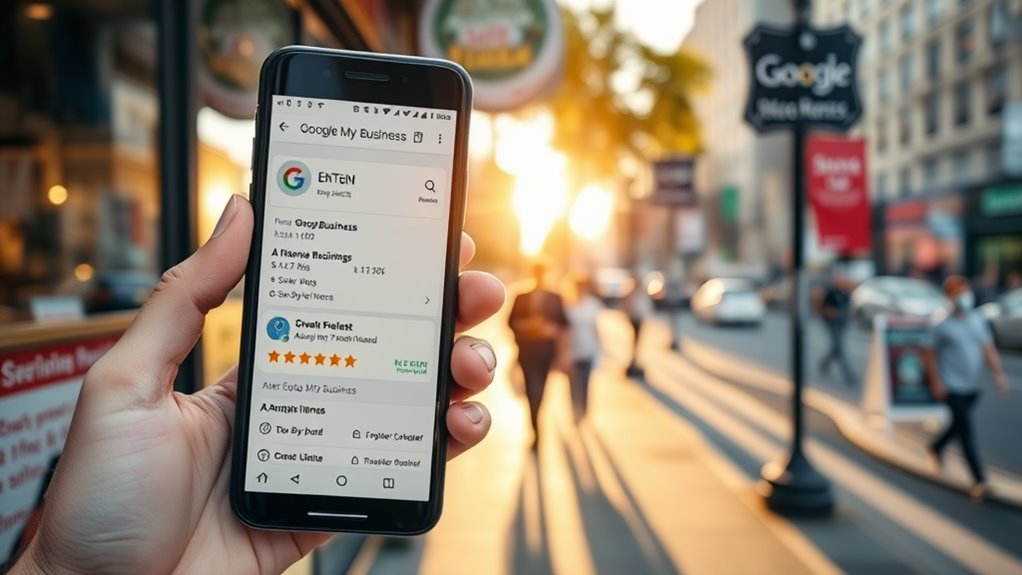
Building local citations across the web represents an essential pillar of local SEO success. Citations, which include your business name, address, and phone number (NAP), help search engines verify your company's legitimacy and improve your local search rankings. You'll need to guarantee your business information remains consistent across all platforms to maximize the impact of your citation-building efforts.
To effectively build your local citations, focus on these key strategies:
- Start with major directories like Google Business Profile, Yelp, and Yellow Pages, guaranteeing your NAP details are identical across all platforms
- Target industry-specific directories relevant to your business niche, such as TripAdvisor for hospitality or Healthgrades for medical practices
- Submit your business information to local chambers of commerce, business associations, and community websites to strengthen local relevance
- Use citation management tools like Moz Local or BrightLocal to monitor and maintain consistency across multiple platforms
Remember to regularly audit your citations to identify and correct any discrepancies. According to BrightLocal's research, businesses with accurate citations are 300% more likely to rank in Google's Local Pack than those with inconsistent information.
Generate Customer Reviews
Customer reviews serve as powerful social proof and an essential ranking factor for local SEO success. Search engines, particularly Google, use review signals to determine your business's relevance and reliability in local search results.
Key Strategies for Review Generation:
- Set up and optimize your Google Business Profile to make reviewing easy for customers
- Create a simple review link that you can share via email or text message
- Implement an automated review request system that triggers after purchase or service completion
- Train your staff to ask for reviews at ideal touchpoints in the customer journey
Best Practices for Review Management:
- Respond to all reviews, both positive and negative, within 24-48 hours
- Use templates for responses but customize them for each reviewer
- Include keywords naturally in your review responses
- Showcase your best reviews on your website using schema markup
Remember to follow these guidelines:
- Never offer incentives for reviews, as it's against most platforms' policies
- Space out review requests to maintain a natural flow
- Address negative feedback professionally and work toward resolution
- Monitor your review profiles across multiple platforms, including industry-specific sites
Create Local Content Strategy

While reviews build trust with potential customers, a targeted local content strategy helps you connect with your specific geographic audience. Creating content that resonates with local searchers involves understanding your community's unique needs, interests, and challenges.
To develop an effective local content strategy, you'll need to focus on these key elements:
- Local keyword integration – Include your city, neighborhood, and regional terms naturally in your content, but aim for a density of 1-2% to avoid oversaturation
- Community-focused blog posts – Write about local events, news, and developments that matter to your area, ensuring 60% of your content addresses local topics
- Location-specific landing pages – Create dedicated pages for each service area, incorporating local landmarks, cultural references, and neighborhood-specific information
- Local resource guides – Develop thorough guides about your community, including business directories, event calendars, and area-specific how-to content
Remember to update your local content regularly, ideally posting new material 2-3 times per month. You'll want to monitor your analytics to identify which local topics generate the most engagement and adjust your strategy accordingly.
Conclusion
Just like tending to a garden, local SEO requires consistent care and attention to flourish. You've now got the essential tools to start growing your local online presence: an optimized Google Business Profile, targeted keywords, citations, customer reviews, and local content. By implementing these foundational strategies, you'll steadily improve your visibility in local search results. Remember, local SEO isn't a sprint but a marathon – stay committed, and you'll see your business climb those local rankings.