
To build a strong yard sign, you'll need to focus on three key elements: materials, construction, and installation. Start with weather-resistant materials like aluminum composite or MDO plywood, which can last 2-5 years with proper care. Use an H-frame design with posts inserted 18-24 inches into the ground, and add diagonal cross bracing at 45-degree angles for maximum stability. Install galvanized hardware and pre-drill holes to prevent splitting, while leaving 1/8-inch gaps for temperature changes. For durability, apply UV-resistant clear coat and use weather-resistant inks. These fundamentals just scratch the surface of creating a yard sign that'll withstand the elements.
Key Takeaway
- Choose weather-resistant materials like Aluminum Composite or MDO Plywood, ensuring a lifespan of 2-5 years with proper maintenance.
- Install H-frame design with posts 18-24 inches deep and diagonal supports at 45-degree angles for maximum stability.
- Use galvanized screws and waterproof wood glue for assembly, leaving 1/8-inch gaps to accommodate temperature changes.
- Space support stakes 24-36 inches apart and position the sign at a 90-degree angle for optimal visibility.
- Apply UV-resistant clear coat every six months and inspect hardware monthly to maintain structural integrity.
Selecting Weather-Resistant Materials
When it comes to creating a durable yard sign, choosing weather-resistant materials is essential. Your sign needs to withstand rain, wind, sun exposure, and temperature fluctuations while maintaining its structural integrity.
Primary Materials to Contemplate:
- Corrugated Plastic (Coroplast) – Offers excellent durability for 6-12 months, withstands temperatures from -20°F to 140°F
- MDO Plywood – Marine-grade material that lasts 2-3 years with proper sealing
- Aluminum Composite – Premium choice with 3-5 year lifespan, resistant to rust and corrosion
Protective Coatings and Treatments:
- UV-resistant laminate – Prevents color fading and extends life by 40%
- Weather-seal spray – Creates moisture barrier for wooden materials
- Anti-rust primers – Essential for metal components and fasteners
You'll want to match your material choice to your sign's intended lifespan and budget. For temporary signs lasting 3-6 months, coroplast at $5-8 per square foot works well. For permanent installations, contemplate aluminum composite at $12-15 per square foot, which provides superior weather resistance and professional appearance.
Remember to factor in your local climate conditions when selecting materials, as humidity levels and temperature extremes can considerably impact durability.
Design for Maximum Stability
Ground stability serves as the foundation for any successful yard sign installation. To guarantee your sign withstands environmental challenges, you'll need to implement strategic design elements that enhance its structural integrity.
Key Stability Features:
- H-frame design: Use two posts connected by a horizontal support, which provides 40% more stability than single-post designs
- Post depth: Insert posts at least 18-24 inches into the ground for ideal anchoring
- Cross bracing: Add diagonal supports at 45-degree angles between posts and sign face
Installation Considerations:
- Soil composition: Dense clay requires 12-inch depth, while sandy soil needs 24-inch depth
- Post spacing: Position posts at 1/3 intervals across your sign's width
- Base reinforcement: Use concrete footings in high-wind areas
Advanced Stability Tips:
- Install ground sleeves for easy removal and replacement
- Add weight-distributing footplates for signs larger than 4×4 feet
- Implement a slight backward tilt (5-7 degrees) to reduce wind resistance
You'll achieve maximum stability by combining these elements based on your specific conditions. Remember to factor in local weather patterns and terrain variations when selecting your stability features.
Assembly and Construction Methods
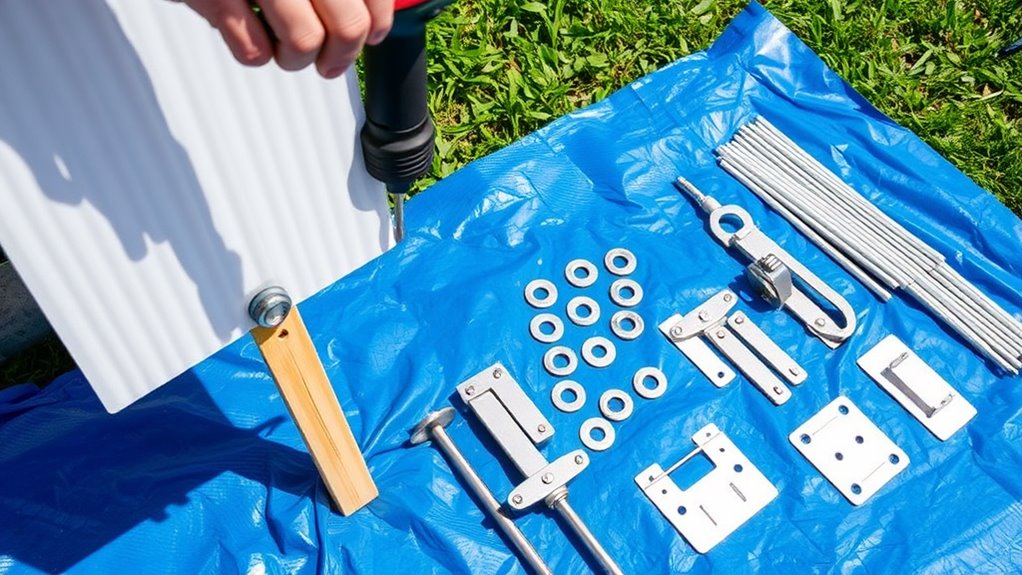
The assembly process makes or breaks a yard sign's durability. You'll need to follow specific construction methods to guarantee your sign withstands various weather conditions and stays upright for extended periods.
Essential Assembly Steps:
- Pre-drill holes in your materials to prevent splitting and guarantee proper alignment
- Use rust-resistant fasteners, including 1.5-inch galvanized screws or bolts
- Apply waterproof wood glue between joints for added strength
- Install diagonal bracing at 45-degree angles for maximum support
Material Connection Methods:
- H-frame construction: Connect two vertical posts with horizontal supports
- Double-sided mounting: Secure your sign face to both sides of the frame
- Corner reinforcement: Add metal brackets at 90-degree joints
- Post anchoring: Bury posts at least 24 inches deep for stability
Critical Tips:
- Leave 1/8-inch expansion gaps between materials for temperature fluctuation
- Seal all connection points with silicone caulk
- Use washers with your fasteners to distribute pressure evenly
- Test stability by applying moderate force from multiple angles before final placement
Remember to check local regulations regarding sign installation depth and height restrictions before completing your assembly.
Proper Ground Installation Techniques
Securing your yard sign properly into the ground guarantees its long-term stability and effectiveness. To confirm ideal installation, you'll need to follow specific depth and positioning guidelines while considering soil conditions and weather factors.
Key Installation Steps:
- Drive stakes or posts at least 18-24 inches deep for maximum stability
- Position your sign at a 90-degree angle to the ground
- Space multiple stakes 24-36 inches apart for larger signs
- Install additional support braces for signs wider than 4 feet
Ground Preparation Tips:
- Test soil density before installation to determine required force
- Mark utility lines by calling 811 before digging
- Pre-dig holes in extremely hard soil conditions
- Use a level to confirm proper alignment
Weather Considerations:
- Install signs 15% deeper in areas with high wind exposure
- Add drainage holes in wet climates to prevent water accumulation
- Install metal ground sleeves in sandy soils for added stability
- Consider seasonal ground freeze-thaw cycles when determining depth
You'll want to check your sign's stability periodically, especially after severe weather events, and adjust the installation depth or support system as needed to maintain ideal performance.
Support Systems and Hardware
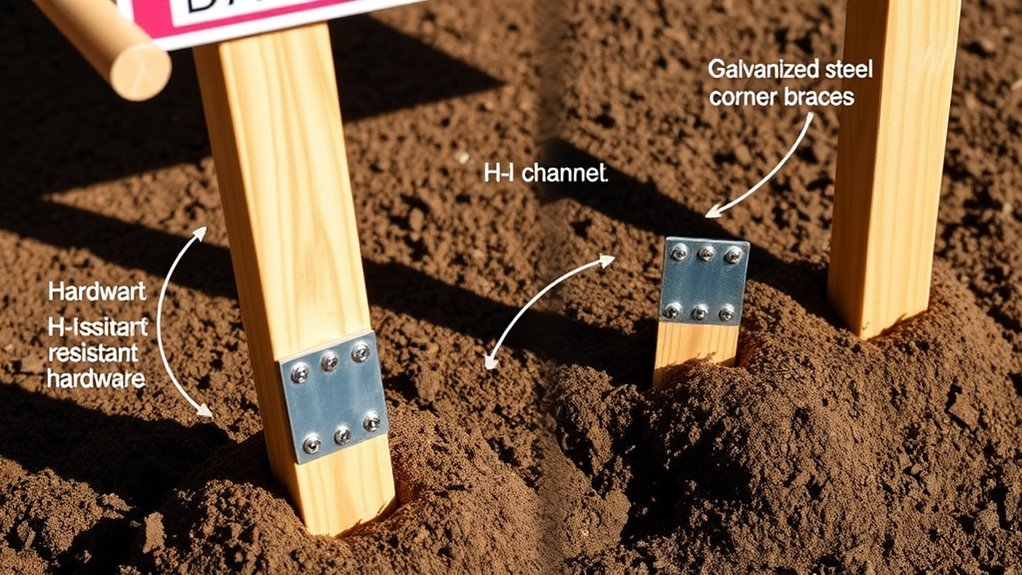
Quality support systems and hardware serve as the backbone of any durable yard sign, determining both its longevity and resistance to environmental stresses. Your selection of support materials will directly impact how well your sign withstands wind, rain, and other outdoor challenges.
Essential Hardware Components:
- H-stakes (metal): Use 30-inch stakes for standard signs, providing 10 inches of ground penetration
- Cross braces: Install at least two 1×2-inch aluminum supports for signs larger than 4 square feet
- Mounting brackets: Choose galvanized steel brackets with pre-drilled holes for easy assembly
- Corner reinforcements: Add metal L-brackets at each corner for enhanced structural integrity
Support System Options:
- Single-Post System
- Ideal for signs under 2×2 feet
- Requires one 1.5-inch diameter post
- Includes stabilizing cross brace
- Dual-Post System
- Recommended for signs larger than 2×2 feet
- Uses two parallel posts spaced at 1/3 intervals
- Features diagonal wind braces
When selecting hardware, you'll want to use rust-resistant materials like galvanized steel or aluminum. These materials typically last 3-5 years in outdoor conditions and provide superior strength-to-weight ratios compared to plastic alternatives.
Long-Term Maintenance and Protection
Regular maintenance practices help extend your yard sign's lifespan and preserve its professional appearance through changing seasons. You'll need to establish a consistent care routine that addresses both preventive measures and immediate damage control.
Key Maintenance Steps:
- Clean your sign every 4-6 weeks using a mild soap solution and soft cloth, avoiding harsh chemicals that can damage protective coatings or fade colors.
- Inspect support systems monthly, checking for loose hardware, rust development, or soil erosion around posts that could compromise stability.
- Apply UV-resistant clear coat every 6 months to protect against sun damage, which can reduce color vibrancy by up to 40% annually without protection.
- Store portable signs indoors during severe weather events, as wind gusts exceeding 40 mph can cause structural damage.
When you notice any damage, address it immediately to prevent escalation. Keep touch-up paint and replacement hardware on hand for quick repairs. During winter months, you'll want to remove snow accumulation promptly to prevent warping or cracking from freeze-thaw cycles. Consider investing in a weather-resistant cover for temporary protection during harsh conditions.
Conclusion
You'll find that building a yard sign strong enough to withstand a hurricane isn't rocket science when you've followed these proven construction methods. By combining weather-resistant materials, proper stability design, and secure installation techniques, you've created a display that'll serve your needs for years to come. Remember to check your sign regularly, perform basic maintenance, and it'll continue making your message visible to thousands of passersby.