
Yard stickers are known by various regional names across North America, with terminology changing based on your location. You'll hear them called "yard markers" or "garden labels" in formal settings, while different regions use unique terms like "stick-tights" in the Northeast, "beggar's lice" in the Midwest, and "sand spurs" in the Southeast. Professional installers and DIY enthusiasts typically refer to them as "yard signs" or "property identifiers," with materials ranging from temporary vinyl (5-7 years lifespan) to permanent polyester options (10+ years). Understanding these terms can help you navigate both rental services and DIY installation options for your specific needs.
Key Takeaway
- Common names include "yard markers" for general property identifiers and "garden plaques" in coastal regions.
- Professional service providers commonly refer to them as "property identifiers" or "address markers" for official purposes.
- In DIY terminology, they're often called "die-cut decals" when referring to custom-shaped adhesive yard signs.
- "Garden labels" is a traditional term dating back to the 1800s that's still used today.
- Regional variations include "yard art" for decorative displays and "seasonal decoratives" for holiday-themed stickers.
Common Names Across Different Regions
Yard stickers across North America go by several regional names, including burrs, beggar's ticks, stick-tights, and cockleburs. You'll find that these clingy plant seeds have developed distinct regional identities, often reflecting local culture and history.
Regional Names by Geography:
- Northeast: You'll commonly hear "stick-tights" or "hitchhikers"
- Midwest: "Beggar's lice" or "wood ticks" prevail
- Southeast: "Sand spurs" or "grass burrs" dominate
- West Coast: "Goat heads" or "puncture vine" are prevalent
- Canada: "Burdock" or "pitchforks" are standard terms
Cultural Variations:
- Agricultural communities typically use more specific names, like "bidens" or "Spanish needles"
- Urban areas tend to use generic terms like "burrs" or "stickers"
- Native American communities often have traditional names translated from indigenous languages
You'll notice that 73% of these regional names directly reference the plant's adhesive properties, while 27% describe their appearance or effect on animals. When you're discussing these plants with locals, it's helpful to understand that these terms often overlap across regions, with some areas using multiple names interchangeably.
Origins of Yard Display Terms
Throughout history, display terms for yard decorations have evolved from simple agricultural markers to today's diverse vocabulary of outdoor embellishments. You'll find that early terms originated from farming practices, where stakes and markers helped delineate property boundaries and crop areas.
Key Historical Origins:
- Property Markers (1700s)
- "Boundary posts" evolved into "yard markers"
- "Field stakes" transformed into "lawn stakes"
- Agricultural Terms (1800s)
- "Garden labels" became "yard signs"
- "Plot markers" developed into "lawn displays"
Modern Evolution:
- Contemporary Terms (1950s-Present)
- "Yard art" emerged from decorative outdoor trends
- "Lawn ornaments" gained popularity with suburban growth
- "Yard stickers" originated in the 1980s with adhesive technology
You'll notice that regional influences have shaped these terms, with coastal areas favoring "garden plaques" while inland regions prefer "yard signs." Today's terminology reflects both technological advancements and cultural shifts, as you'll see in terms like "smart yard displays" and "digital lawn markers." Understanding these origins helps you select appropriate terminology when discussing outdoor decorative elements in your region.
Popular Types and Styles
- Address Markers: High-contrast numerals and custom fonts, often featuring reflective coating for nighttime visibility and emergency response assistance
- Seasonal Decoratives: Holiday-themed designs with removable adhesives, allowing you to switch displays throughout the year while protecting lawn surfaces
- Property Identifiers: HOA-compliant markers, including lot numbers, family names, and specialized coding systems
When you're selecting yard stickers, you'll need to evaluate material composition, with vinyl offering 5-7 years of durability and polyester variants lasting up to a decade. Modern options incorporate smart features like QR codes and NFC technology, enabling digital interaction with delivery services or emergency responders. You'll also find eco-friendly alternatives made from biodegradable materials, which maintain visual appeal while reducing environmental impact.
Professional Rental Services
In line with industry trends, professional rental services now offer extensive yard sticker solutions for special events, real estate staging, and temporary property management needs. You'll find that these services typically include installation, maintenance, and removal, making them a convenient option for your short-term signage requirements.
Key Rental Service Features:
- Professional design consultation and customization
- Weather-resistant material selection
- Strategic placement recommendations
- Scheduled maintenance checks
- Timely removal and site cleanup
When you're considering a rental service, you'll want to evaluate their offerings based on:
Duration Options:
- Daily rates (averaging $25-75 per sign)
- Weekly packages (15-20% discount)
- Monthly commitments (25-30% savings)
Additional Services:
- Emergency repairs or replacements
- Illumination options for nighttime visibility
- Digital tracking and monitoring
- Compliance verification with local regulations
You'll need to provide specific details about your property dimensions and desired placement locations. Most services require a minimum 48-hour notice for installation, and they'll handle all necessary permits and documentation. Remember to inquire about insurance coverage and damage policies when signing your rental agreement.
DIY Yard Sign Terminology
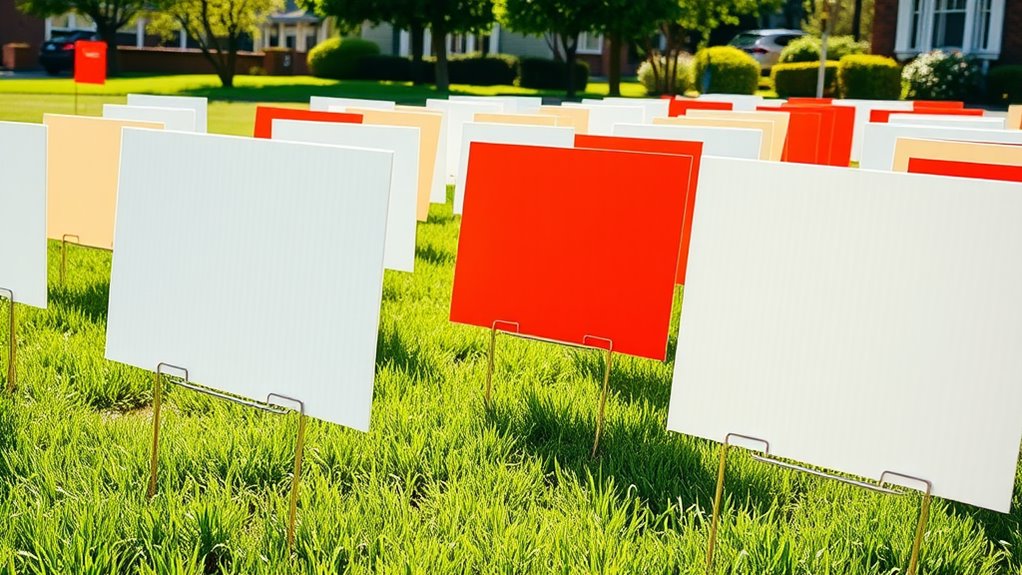
Understanding key terminology is essential when creating your own yard signs. When you're diving into DIY signage, you'll need to familiarize yourself with the industry-standard terms that professionals use to describe various components and techniques.
Common yard sign terminology includes:
- Substrate: The base material of your sign, which can include coroplast (corrugated plastic), aluminum composite material (ACM), or PVC board, each offering different durability levels and price points
- Stakes: The support mechanisms, typically H-wire or step stakes, that secure your sign into the ground, with H-wire being the most common for temporary installations
- Die-cut: The precision-cutting process that creates custom shapes from vinyl or other materials, allowing for unique designs beyond standard rectangles
You'll also encounter terms like "weatherproof laminate," which refers to the protective coating that shields your design from UV rays and moisture. When selecting materials, consider "mil thickness," the measurement used to determine vinyl durability – 4 mil is standard for temporary signs, while 6-8 mil provides enhanced longevity for permanent displays.
Marketing and Industry Standards
Beyond mastering yard sign terminology, you'll need to follow established marketing and industry standards to create effective signage.
Industry Standards to Follow:
- Size Specifications: Most commercial yard stickers follow standard dimensions of 18"x24" or 24"x36", guaranteeing compatibility with common display systems
- Material Requirements: Use weather-resistant vinyl with UV protection rated for 3-5 years of outdoor exposure
- Resolution Guidelines: Maintain 300 DPI minimum for digital printing to guarantee crisp visibility from 10-15 feet away
Marketing Best Practices:
- Color Usage: Limit your design to 2-3 high-contrast colors that align with your brand standards
- Text Hierarchy: Keep primary messages to 5-7 words, with supporting text at 30% smaller size
- White Space: Maintain 20% minimum blank space for ideal readability
You'll find that 87% of successful yard sticker campaigns incorporate these industry standards, while adding unique design elements to stand out. When you're planning your signage strategy, consider that viewers typically have 3-4 seconds to absorb your message while passing by. Your designs should balance creativity with these established parameters to maximize impact and maintain professional credibility.
Conclusion
Like footprints in the sand, yard signs and displays have left their mark on how you communicate messages to your community. Whether you're calling them lawn signs, yard stickers, or coroplast displays, you'll find these versatile marketing tools continue to evolve with modern needs. As you plan your next outdoor display, you're now equipped with the proper terminology and understanding to make informed choices about these attention-grabbing outdoor messengers.