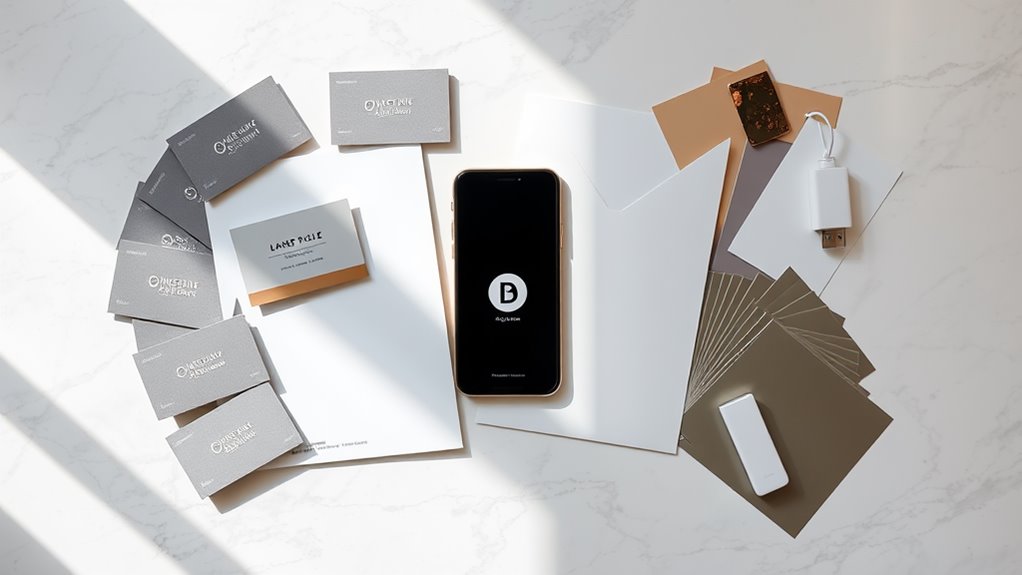
A professional logo package delivers all the essential files you'll need to use your logo effectively across different platforms and materials. You'll receive vector files (AI, EPS, SVG) for unlimited scaling, along with raster files (PNG, JPG, TIFF) for digital use. The package includes multiple color variations: full-color, black and white, grayscale, and reversed options, each formatted in RGB for digital and CMYK for print. You'll also get guidelines specifying minimum size requirements, clear space rules, and color codes (including Pantone, HEX, and RGB values). Understanding these components will guarantee your brand maintains consistency across all applications.
Key Takeaway
- Vector files (AI, EPS, SVG) and raster files (PNG, JPG, TIFF) in multiple formats for both print and digital use.
- Color variations including full-color, black and white, grayscale, and reversed versions for different applications.
- Files optimized for both CMYK (print) and RGB (digital) color modes, along with Pantone color specifications.
- Clear guidelines specifying minimum size requirements, spacing rules, and usage restrictions for logo implementation.
- Multiple file sizes and resolutions, including high-resolution master files and web-optimized versions with transparent backgrounds.
File Types and Formats
Logo files come in various digital formats optimized for different uses. You'll need different versions of your logo to guarantee it displays correctly across all platforms and applications.
Primary File Types You'll Receive:
- Vector Files (AI, EPS, SVG)
- Infinitely scalable without quality loss
- Perfect for large-scale printing
- Ideal for sign makers and printers
- Raster Files (PNG, JPG, TIFF)
- Web-optimized for digital use
- Best for social media and websites
- Multiple resolution options
Color Variations:
- CMYK files for printed materials
- RGB files for digital displays
- Pantone/PMS for color consistency
Each format serves a specific purpose in your branding toolkit. You'll want vector files when working with professional printers, while PNGs work best for your website and digital presentations. Vector formats maintain crisp edges at any size, which you'll appreciate when scaling your logo for different applications.
File Organization:
- High-resolution master files
- Web-optimized versions
- Black and white alternatives
- Transparent backgrounds
- Different size variations
These formats guarantee you're prepared for any branding scenario, from business cards to billboard advertising.
Logo Color Variations
Proper color variations of your brand identity expand far beyond the primary design format. You'll need multiple versions to guarantee your logo maintains its impact across different applications and contexts.
Essential Color Variations Include:
- Full-color primary version
- One-color solid black
- One-color solid white (reverse)
- Grayscale variation
- Monochromatic versions in your brand colors
Each variation serves specific purposes:
Full Color
Your standard logo showcases your complete brand palette and serves as the default version for most applications.
One-Color Options
You'll need black and white versions for:
- Faxes and basic printing
- Embroidery and merchandise
- Background compatibility
- Cost-effective production
Grayscale
This version converts your color palette to black, white, and gray values, essential for:
- Newspaper advertising
- Photocopying
- Black-and-white printing
- Legacy systems
Secondary Color Options
Consider including:
- Two-color variations for budget-conscious printing
- Transparent background versions
- Dark and light background adaptations
Each variation should maintain your logo's integrity while providing flexibility for different mediums and reproduction methods.
Size and Space Requirements
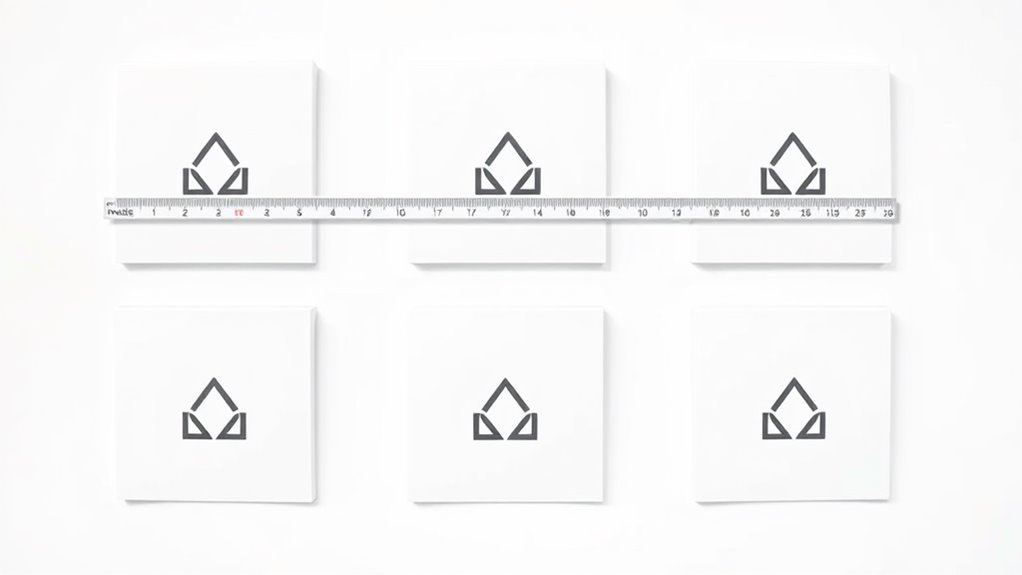
Clear-cut guidelines for size and space requirements confirm your logo remains legible and impactful across all applications. You'll need specifications for both minimum and maximum sizes to verify your brand mark maintains its integrity across different media.
Key Size Requirements:
- Minimum size: 0.5 inches (print) and 32 pixels (digital) for most logos
- Maximum size: Typically unlimited, but vector formats are essential for large-scale applications
- Social media dimensions: Specific sizes for each platform's profile and header images
Space Requirements:
- Clear space: Define a protection zone around your logo using a measurable unit (like x-height)
- Grid system: Include measurements based on your logo's proportional grid
- Spacing ratios: Standard clear space is typically 10-20% of the logo's width
Application Guidelines:
- Digital display requirements for websites and mobile devices
- Print specifications for business cards, letterheads, and signage
- Resolution requirements: 300 DPI for print, 72 DPI for web
- Format variations: AI, EPS, PDF for print; PNG, JPG for digital
- Responsive scaling parameters for digital applications
Logo Design Guidelines
Primary Guidelines to Include:
- Color palette specifications with RGB, CMYK, Pantone, and HEX codes
- Minimum size requirements to maintain legibility
- Clear space rules to prevent crowding
- Approved background usage and contrast requirements
- Typography specifications for taglines and supporting text
Usage Requirements:
- Do's and don'ts for logo manipulation
- Guidelines for co-branding situations
- Social media application standards
- Digital vs. print specifications
- Watermark and favicon variations
You'll want to specify acceptable logo modifications and strictly prohibited alterations:
- Don't stretch or distort
- Don't alter colors outside approved palette
- Don't rearrange logo elements
- Don't add effects like shadows or gradients
- Don't place on competing patterns or busy backgrounds
Include real-world examples showing proper implementation across different mediums, from business cards to billboards. This guarantees your team and vendors maintain brand integrity while executing marketing materials.
Digital and Print Assets
A thorough logo package must include ready-to-use files in both digital and print formats to guarantee consistent brand representation across all touchpoints. You'll need vector files for scalability and raster files for digital applications, ensuring your logo maintains its integrity across various platforms and sizes.
For extensive brand implementation, you'll want these essential file formats:
- Vector files (AI, EPS, SVG) that allow unlimited scaling without quality loss, perfect for large-format printing and professional design work
- High-resolution raster files (PNG, JPEG) in multiple sizes, optimized for web, social media, and digital marketing campaigns
- PDF files in both CMYK and RGB color modes to accommodate different printing and display requirements
When you're working with different vendors and platforms, you'll need multiple color variations of your logo, including full-color, black and white, and reversed versions. Each format serves a specific purpose, from website headers to business cards, and having the right file type readily available will save you time and maintain brand consistency. Your package should include files that work seamlessly across modern devices while remaining compatible with traditional print applications.
Conclusion
Just like a well-packed suitcase for a business trip, your logo package should equip you with everything you'll need for your brand's journey. You'll want to make certain you've got all the right file formats, color variations, and guidelines to maintain consistency across every touchpoint. When you're armed with a complete logo package, you're ready to present your brand professionally, whether it's on a billboard or a business card.