
Political campaigns rely on diverse marketing teams led by Campaign Marketing Directors who oversee the entire strategy. You'll find Digital Media Managers handling online presence and social media campaigns, while Communications Teams manage press relations and media coverage. Data Analytics Specialists crunch numbers to target specific voter demographics, and Field Operation Coordinators manage grassroots efforts. Creative Teams develop campaign materials, from traditional yard signs to digital ads, while Social Media Experts optimize content across platforms like Facebook, Twitter, and Instagram. Understanding how these roles work together can help you grasp the complex machinery behind successful political marketing.
Key Takeaway
- Campaign Marketing Directors lead teams of 10-15 specialists and develop overall marketing strategies while managing campaign budgets.
- Digital Media Managers handle online presence, social media strategy, and digital advertising across platforms like Facebook and TikTok.
- Social Media Campaign Experts optimize content, monitor engagement, and manage community interactions across different social platforms.
- Data Analytics Specialists transform voter information into actionable insights and conduct predictive modeling to identify likely supporters.
- Communications and Press Teams manage media relations, distribute press releases, and coordinate campaign messaging with news outlets.
Campaign Marketing Directors and Strategists
Campaign marketing directors and strategists serve as the architects behind a political campaign's messaging and outreach efforts. You'll find these professionals coordinating teams of 10-15 specialists who handle everything from social media to traditional advertising channels.
Key Responsibilities:
- Developing thorough marketing strategies aligned with campaign goals
- Managing budgets, typically ranging from $50,000 to several million dollars
- Conducting voter research and demographic analysis
- Overseeing message testing and refinement
You'll notice that successful campaign strategists often have backgrounds in both marketing and political science. They're responsible for crafting messages that resonate with your specific voting demographic while maintaining the candidate's core values and policy positions.
Modern Campaign Director Skills:
- Digital marketing expertise
- Data analytics proficiency
- Crisis communication management
- Multi-platform content strategy
When you're working with these professionals, you'll see them utilize sophisticated voter targeting tools and AI-driven analytics platforms. They'll coordinate your campaign's presence across various channels, ensuring consistent messaging while adapting to rapid changes in the political landscape. Today's campaign directors typically spend 60% of their budget on digital marketing efforts.
Digital Media Managers
In today's political landscape, digital media managers hold increasingly central roles in shaping a candidate's online presence and messaging strategy. You'll find these professionals orchestrating thorough digital campaigns across multiple platforms, guaranteeing your candidate's message reaches voters where they spend most of their time.
As a digital media manager, you're responsible for:
- Developing and executing social media strategies across platforms like Facebook, Twitter, Instagram, and TikTok, where you'll reach up to 80% of potential voters
- Managing online advertising budgets, often exceeding $1 million for major campaigns, while optimizing ad performance through A/B testing
- Creating and scheduling content calendars that align with campaign milestones and current events
- Analyzing metrics and engagement data to refine messaging strategies in real-time
You'll need to stay current with platform algorithm changes, emerging social media trends, and digital advertising regulations. Digital media managers typically coordinate with other team members, including content creators, graphic designers, and data analysts, to guarantee consistent messaging across all digital touchpoints. Your role requires both technical expertise and strategic thinking to effectively amplify your candidate's message in the digital space.
Communications and Press Teams

Communications and press teams serve as the essential bridge between political campaigns and media outlets, managing everything from press releases to crisis responses. You'll find these teams working around the clock to shape public perception and control your campaign's narrative across various media channels.
Key Responsibilities:
- Crafting and distributing press releases (40% of daily activities)
- Managing media relationships and interview requests
- Coordinating press conferences and media events
- Developing rapid response strategies for breaking news
- Writing speeches and talking points for candidates
Media Management Strategy:
When you're working with a communications team, you'll notice they maintain detailed media lists and monitor coverage 24/7. They'll help you track approximately 75-100 media contacts and typically respond to press inquiries within 30 minutes during business hours.
Crisis Management:
Your communications team needs to be ready for unexpected challenges. They'll:
- Create pre-planned response templates
- Maintain a crisis communication protocol
- Monitor social media sentiment
- Coordinate with legal teams when necessary
- Provide media training for campaign spokespeople
Data Analytics Specialists
Modern political campaigns rely on data analytics specialists to transform vast amounts of voter information into actionable insights. You'll find these experts working behind the scenes, utilizing advanced software and statistical models to guide campaign decisions.
Data specialists help you understand voter behavior through:
- Predictive modeling that identifies likely supporters and swing voters in your district
- Geographic information systems (GIS) that map voting patterns and optimize campaign stops
- A/B testing of campaign messages across different demographic segments
- Real-time tracking of social media sentiment and voter engagement metrics
When you're running a campaign, your data analytics team will help you allocate resources efficiently by analyzing historical voting data, demographic trends, and polling results. They'll create voter profiles using hundreds of data points, from age and income to social media activity and consumer behavior.
You'll need to integrate your data team's insights with other campaign functions, as they'll provide critical information for targeting ads, planning events, and crafting messages. Their analysis helps you understand where to focus your campaign efforts and which strategies are most likely to resonate with specific voter segments.
Field Operation Coordinators
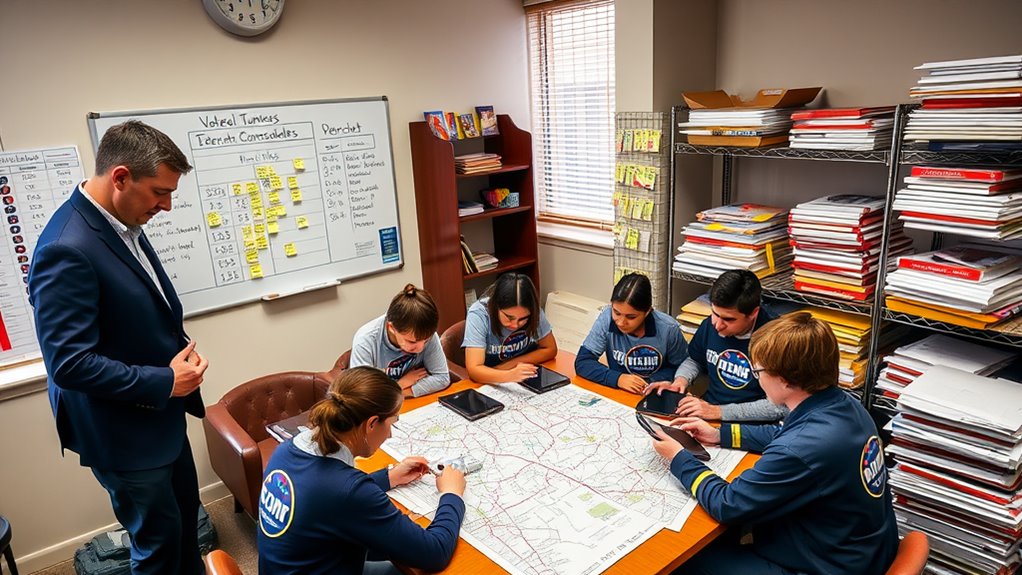
Field operation coordinators serve as the backbone of your campaign's ground game, orchestrating the complex network of volunteers and staff who directly engage with voters. You'll find these professionals managing day-to-day outreach activities, including door-to-door canvassing, phone banking, and community events.
Key Responsibilities:
- Developing and implementing voter contact strategies
- Training and supervising volunteer teams
- Coordinating with data teams to target specific voting blocks
- Managing field office operations and resources
- Tracking daily metrics and adjusting strategies accordingly
Your field coordinator will typically oversee:
- 25-50 volunteers per shift
- 3-5 regional field offices
- Weekly voter contact goals
- Real-time reporting systems
Skills and Tools:
- VAN (Voter Activation Network) expertise
- Team management software
- Geographic Information Systems (GIS)
- Mobile canvassing apps
- Communication platforms
You'll want your field coordinator to maintain detailed documentation of:
- Voter interaction rates
- Volunteer retention metrics
- Territory coverage maps
- Response tracking
- Resource allocation effectiveness
These professionals guarantee your campaign maintains consistent messaging while adapting to local community needs and demographic variations.
Advertising and Creative Teams
Creative powerhouses within political campaigns, advertising and creative teams transform complex policy messages into compelling visual and verbal content that resonates with voters. You'll find these teams working closely with campaign strategists to develop messaging that captures your candidate's vision while connecting with target demographics.
Key Responsibilities:
- You'll need to oversee multimedia content creation, including TV spots, digital ads, and social media graphics that align with your campaign's core message and branding guidelines.
- You'll collaborate with pollsters and data analysts to craft messages that address voter concerns identified through research and focus groups.
- You'll manage the production timeline for all creative assets, guaranteeing deliverables meet both quality standards and campaign deadlines.
- You'll coordinate with media buyers to optimize ad placement and reach your target audience effectively.
When you're working with advertising and creative teams, you'll notice they're constantly adapting to emerging platforms and technologies. Your creative team must balance traditional advertising methods, like yard signs and mailers, with innovative digital strategies that include programmatic advertising and social media campaigns. They'll make certain your message reaches voters across multiple touchpoints while maintaining consistent branding throughout all campaign materials.
Social Media Campaign Experts

Building on the creative team's efforts, social media campaign experts take your message directly to voters' screens and notifications. These specialists understand the nuances of each platform and how to maximize your campaign's digital presence through strategic content deployment.
Key Responsibilities:
- Platform-specific content optimization
- Engagement monitoring and community management
- Real-time response coordination
- Analytics tracking and reporting
- Paid social media advertising management
Platform Strategy Development:
You'll need experts who can craft unique approaches for each social network:
- Facebook: Demographic targeting and community building
- Twitter: Rapid response and message amplification
- Instagram: Visual storytelling and youth engagement
- LinkedIn: Professional networking and policy discussions
Success Metrics:
Your social media team will track:
- Engagement rates (industry average: 1-3% per post)
- Follower growth (target: 5-10% monthly)
- Message reach and impressions
- Conversion rates for calls-to-action
These specialists work closely with your data team to adjust targeting and content strategy based on real-time performance metrics, ensuring your campaign message reaches the right voters at the right time, through the right platform.
Conclusion
Political campaign marketing is a massive team effort that you'll find operates like a well-oiled machine. From data analysts who track every voter's move to social media experts who can make a candidate go viral overnight, these marketing professionals work around the clock to shape public opinion. You'll see hundreds of skilled specialists coordinating their efforts, making split-second decisions, and crafting messages that could literally change the course of history.