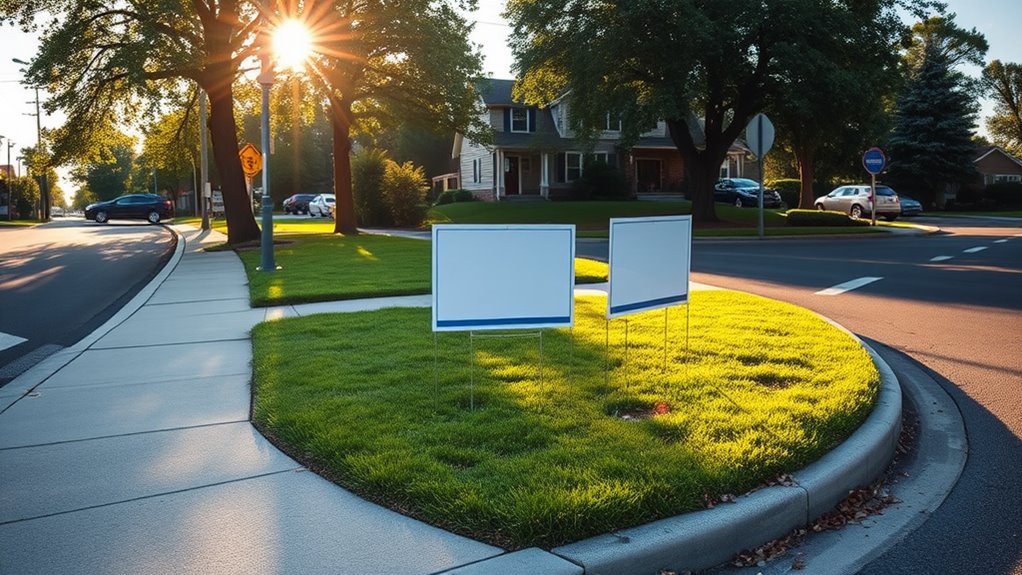
You can place yard signs for your business in several strategic locations, but you'll need to follow local regulations first. Start by checking your municipality's ordinances for size limits (typically under 6 square feet) and permit requirements ($25-100). Once approved, position signs 10-15 feet from roadways on private property with written owner permission, or in permitted public right-of-way zones. High-traffic areas like major intersections and shopping centers offer maximum visibility, while maintaining proper setbacks (5 feet from buildings). Consider both temporary options for promotions (30-90 days) and permanent installations based on your marketing goals. Understanding additional placement strategies will help maximize your signage investment.
Key Takeaway
- Place signs 10-15 feet from roadways near major intersections where they're visible to stopped traffic during peak hours.
- Position signs at eye level (4-6 feet high) on private property with written permission from property owners.
- Install signs near shopping centers and complementary businesses where your target customers frequently visit.
- Put signs along busy commuter routes while following local setback requirements and right-of-way restrictions.
- Place temporary signs in public spaces within legal limits, typically under 6 square feet and with proper permits.
Legal Requirements and Local Regulations
Three essential legal steps must be taken before placing business yard signs. You'll need to research local ordinances, obtain necessary permits, and understand zoning restrictions that govern temporary signage in your area.
Key Legal Considerations:
- Municipal codes regarding sign size, height, and placement distances
- Duration limits for temporary signs (typically 30-90 days)
- Permit fees and renewal requirements
- Rights-of-way restrictions and setback requirements
Location-Specific Regulations:
- Residential zones: You'll need property owner permission and may face stricter limitations
- Commercial zones: Greater flexibility but must maintain specific distances from roads
- Historic districts: Additional design guidelines and approval processes apply
Your Compliance Checklist:
- Contact your local zoning office for current regulations
- Submit permit applications with required documentation
- Document all approved locations with photos and measurements
- Keep copies of permits readily available
Remember that regulations can vary greatly between jurisdictions, and you're responsible for staying current with any changes. Non-compliance can result in fines ranging from $50 to $500 per violation, so it's vital to maintain proper documentation and regular permit renewals.
Private Property Placement Guidelines
Successful yard sign placement on private property requires careful attention to both visibility and property owner relationships. You'll need to establish clear agreements with property owners while maximizing your signs' exposure to potential customers.
Key Placement Guidelines:
- Position signs 10-15 feet from roadways for ideal visibility
- Maintain 5-foot minimum distance from buildings and structures
- Install at a 15-45 degree angle toward oncoming traffic
- Keep signs at eye level, typically 4-6 feet high
- Space multiple signs at least 50 feet apart
Property Owner Considerations:
- Get written permission before installation
- Provide property owners with your contact information
- Specify exact placement locations in your agreement
- Include duration of sign placement in writing
- Offer compensation or incentives when appropriate
Best Practices for Installation:
- Use professional-grade stakes or posts
- Check ground for utilities before digging
- Install during daylight hours
- Remove signs promptly when agreements expire
- Document placement with photos
Remember to regularly inspect your signs for damage, straighten them after weather events, and maintain positive relationships with property owners through consistent communication and respectful property treatment.
Public Space Considerations
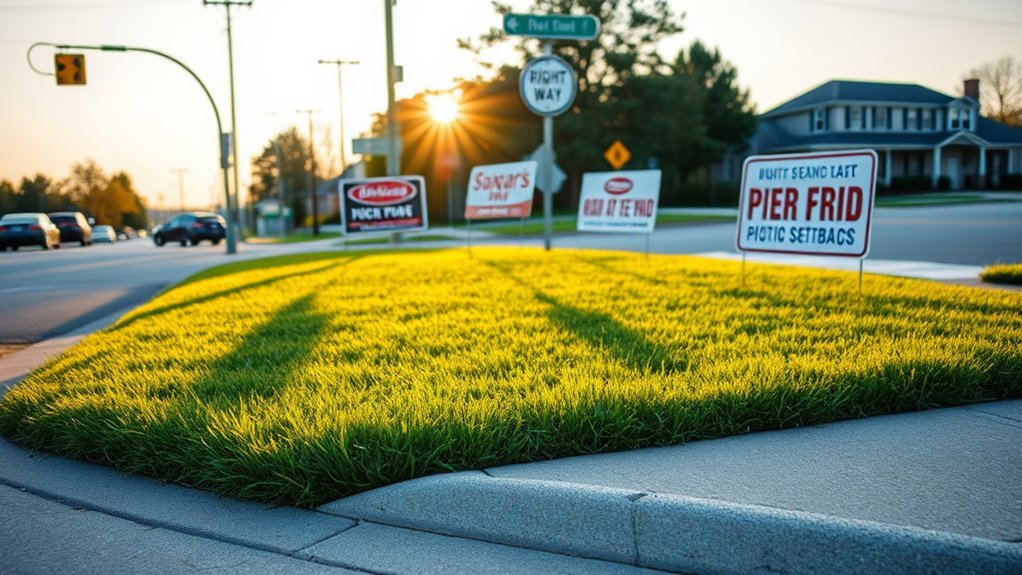
Beyond private property placements, public spaces offer additional opportunities for yard sign advertising – but they come with specific rules and restrictions. You'll need to navigate municipal regulations and understand what's permissible in your area before deploying signs in public spaces.
Key Public Space Guidelines to Evaluate:
- Right-of-Way Areas: Most cities allow temporary signs in public right-of-way zones, but you'll need to maintain specific distances (typically 10-15 feet) from roadways, intersections, and traffic signals.
- Time Restrictions: Many municipalities limit public space signage to specific hours (often 6 AM to 10 PM) or enforce maximum display durations of 30-60 days.
- Size and Material Requirements: Public space signs usually must stay under 6 square feet and use weather-resistant materials to prevent hazardous conditions.
Before placing signs in public areas, you'll need to obtain necessary permits from your local government office. Most cities charge between $25-100 for temporary sign permits, which typically remain valid for 30-90 days. Remember to document your sign locations and regularly check for compliance with local ordinances to avoid potential fines.
High Traffic Location Strategies
Strategic placement in high-traffic areas can multiply your yard sign's visibility and impact. To maximize your sign's effectiveness, you'll need to analyze traffic patterns and identify locations where your target audience frequently travels.
Key High-Traffic Placement Strategies:
- Position signs at major intersections, ensuring they're visible from multiple directions
- Place signs near traffic lights where vehicles naturally pause
- Target areas near shopping centers with complementary businesses
- Install signs along popular commuter routes during peak travel times
Location Timing Considerations:
- Morning commute routes: 6 AM – 9 AM placement
- Evening rush hour spots: 4 PM – 7 PM visibility
- Weekend shopping areas: Focus on Saturday/Sunday foot traffic
- Event-based placement: Align with local gatherings
You'll want to rotate your signs between different high-traffic locations every 2-3 weeks to maintain freshness and reach new audiences. Research shows that drivers typically need 3-4 exposures to your message before taking action, so clustering multiple signs along frequently traveled routes can increase your conversion rates. Remember to track which locations generate the most response and adjust your placement strategy accordingly.
Temporary Vs Permanent Sign Placement
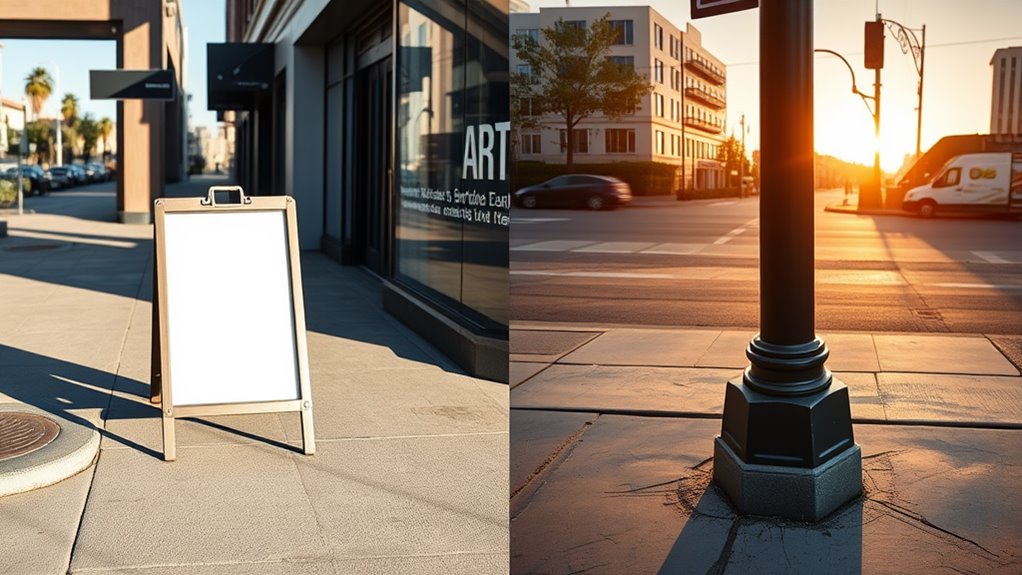
Understanding the key differences between temporary and permanent sign placement can greatly impact your marketing success. When you're planning your yard sign strategy, you'll need to take into account local regulations, durability requirements, and your campaign's timeline.
Temporary signs work best for:
- Short-term promotions lasting 30-90 days
- Seasonal business campaigns that rotate throughout the year
- Testing new locations before committing to permanent installations
For temporary placement, you'll want to use lightweight, weather-resistant corrugated plastic signs that you can easily move and replace. These signs typically cost $15-30 each and last 3-6 months with proper care.
Permanent sign placement requires more substantial materials like aluminum or PVC, which can withstand long-term exposure to elements. You'll need to invest in professional installation and secure necessary permits, which typically range from $50-200 depending on your location.
When choosing between temporary and permanent placement, take into account your budget allocation and marketing goals. If you're running a real estate business or seasonal service, temporary signs offer flexibility. For established brick-and-mortar locations, permanent signs provide consistent visibility and higher perceived professionalism.
Conclusion
You've now got the tools to strategically place your business yard signs for maximum impact – but have you considered how rotating locations could multiply your reach? Remember to always check local regulations, secure proper permissions, and maintain professional standards while placing your signs. By combining high-traffic areas with private property agreements and respecting public space guidelines, you'll create an effective yard sign campaign that drives visibility for your business.