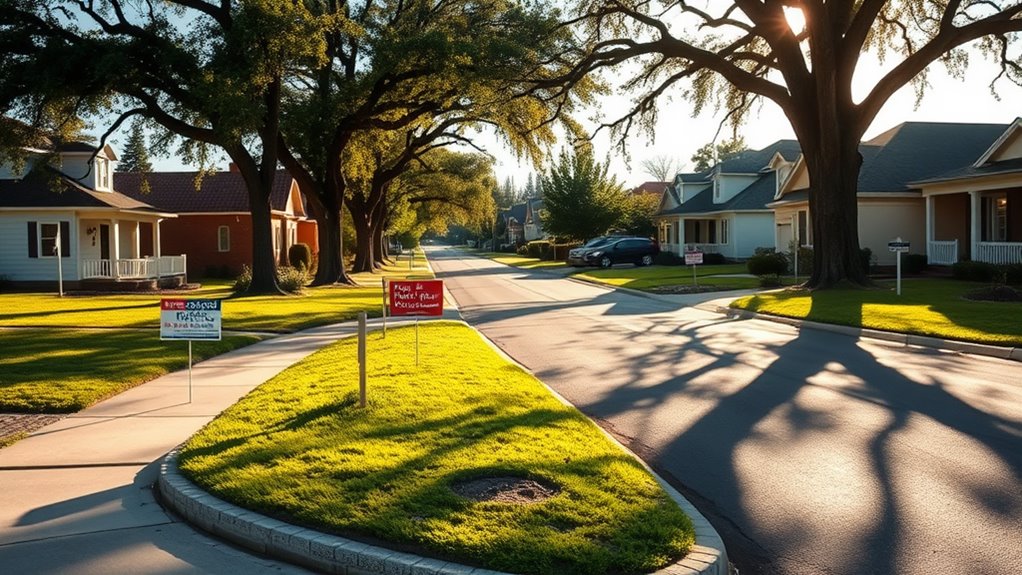
You can legally place yard signs on your private property while following local regulations for size (typically 6-12 sq ft) and height (usually max 6 ft). Keep signs at least 10 feet from public sidewalks and out of utility easements. For public rights-of-way, maintain a 10-foot distance from intersections and 3 feet from curbs. If you're in an HOA, you'll need to comply with their specific size limits (often 18" x 24") and duration restrictions (30-90 days). Commercial properties have larger allowances (up to 32 sq ft), while political signs require proper distance from polling places and timely removal. Understanding additional placement guidelines will help guarantee your signs stay compliant.
Key Takeaway
- Private property is legal for yard signs when placed at least 10 feet from public sidewalks and outside utility easements.
- Most residential areas allow signs within your property boundaries, subject to local size limits and HOA restrictions.
- Public right-of-way placement requires maintaining 10-foot distance from intersections and 3 feet from curbs.
- Commercial properties typically allow signs with setbacks of 10 feet from rights-of-way and sizes under 32 square feet.
- Political signs are legal on private property but must maintain required distance from polling places and include proper disclaimers.
Private Property Guidelines
When placing yard signs on private property, you'll need to follow basic guidelines to avoid legal issues and conflicts with neighbors. Your property rights typically extend to displaying signs, but there are important factors to keep in mind.
Key Property Guidelines:
- Verify your property boundaries before installation
- Place signs at least 10 feet from public sidewalks
- Keep signs out of utility easements
- Check HOA regulations for specific restrictions
Location Requirements:
- Front yard placement: Set back 15-20 feet from street
- Side yard placement: Maintain 5-foot buffer from property lines
- Corner lots: Follow sight triangle requirements (typically 30-foot clearance)
You'll want to evaluate these additional factors:
- Size limitations (most municipalities restrict residential signs to 6-12 square feet)
- Height restrictions (usually capped at 6 feet)
- Duration of display (temporary signs often limited to 60-90 days)
- Number of signs allowed (typically 2-3 per property)
If you're renting, you'll need written permission from your landlord before installing any signs. Many property owners include sign restrictions in lease agreements, so review your contract carefully.
Public Right-of-Way Regulations
Most municipalities strictly regulate yard sign placement in public rights-of-way due to safety and visibility concerns. When you're planning to place signs in these areas, you'll need to understand your local ordinances and follow specific guidelines to avoid fines or sign removal.
Public Right-of-Way Guidelines:
- You must maintain a minimum distance of 10 feet from any intersection or driveway to guarantee proper visibility for drivers
- Your signs can't obstruct traffic signals, street signs, or impede pedestrian walkways
- Most cities require signs to be placed at least 3 feet from the curb or edge of pavement
- You'll need to keep signs under specific height restrictions, typically 3-4 feet tall
- Time limits often apply, with many jurisdictions allowing signs for 60-90 days maximum
Before placing your signs in public areas, contact your local zoning office for detailed regulations. You'll find that many cities have specific permit requirements and fees for right-of-way signage. Additionally, you should consider that utility companies often need access to these areas, so your signs shouldn't interfere with their work or emergency services' access.
Homeowners Association Rules
Nearly 73 million Americans live in communities governed by homeowners associations (HOAs), and these organizations typically maintain strict control over yard sign displays. Before placing any signs in your yard, you'll need to carefully review your HOA's covenants, conditions, and restrictions (CC&Rs).
Common HOA Sign Regulations:
- Size limitations (typically 18" x 24" or smaller)
- Duration restrictions (often 30-90 days maximum)
- Quantity limits (usually 1-2 signs per property)
- Design standards (professional appearance required)
- Content restrictions (political signs may have special rules)
If you're planning to display yard signs, you'll want to:
- Request written approval from your HOA board
- Document any conversations about sign placement
- Keep copies of relevant HOA meeting minutes
- Review state laws that may override HOA restrictions
Remember that HOAs can impose fines for violations, but they can't override certain federally protected rights. For example, during election seasons, many states have laws preventing HOAs from banning political signs entirely. If you're unsure about your rights, you should consult your HOA's legal documentation or seek advice from a property rights attorney.
Commercial Property Restrictions
Just as residential properties face HOA restrictions, commercial properties come with their own set of rules for yard sign placement. When you're planning to place signs on commercial property, you'll need to navigate both local ordinances and property management guidelines.
Key Commercial Sign Restrictions You'll Need to Assess:
- Size limitations typically restrict signs to under 32 square feet, though specific dimensions vary by municipality and property type
- Setback requirements usually mandate placement at least 10 feet from public rights-of-way and property lines
- Duration restrictions often limit temporary signs to 30-90 days, with permits required for longer periods
- Content regulations may prohibit certain types of messaging, particularly those that could be deemed offensive or disruptive
- Lighting and animation rules frequently restrict illuminated signs between 10 PM and 6 AM
You'll need to obtain written permission from the property owner or manager before installing any signs. Check your lease agreement, as it may contain specific clauses about signage rights and restrictions. Many commercial properties require professional installation and regular maintenance of signs to maintain property aesthetics and safety standards.
Remember to document all approvals and keep copies of relevant permits on file.
Political Campaign Sign Laws
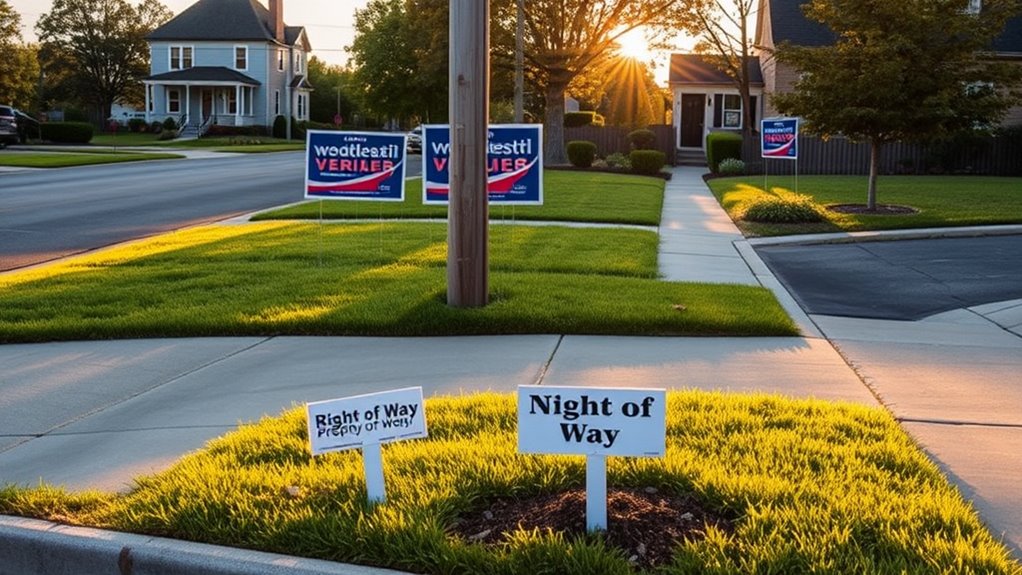
Political campaign signs must follow specific federal, state, and local election laws that protect both free speech rights and public safety.
Key Regulations You Need to Know:
- You'll need to maintain distance requirements from polling places, typically 100-150 feet depending on your state
- Your signs can't be larger than state-specified dimensions, usually 32 square feet for residential areas
- You must include a "paid for by" disclaimer on campaign materials in most jurisdictions
Timing and Placement Guidelines:
- Most municipalities allow you to place signs 60-90 days before an election
- You'll need to remove signs within 7-10 days after the election
- You can't block traffic visibility or place signs in public rights-of-way
Private Property Considerations:
- You must obtain permission from property owners before placing signs
- HOAs may have additional restrictions, but can't completely ban political signs
- Your landlord can't prohibit campaign signs if you're renting, but can set reasonable limitations
Remember to check your local election board's website for specific regulations, as violations can result in fines ranging from $50-500 per offense.
Temporary Signs and Permits
Before installing temporary yard signs, you'll need to understand your local permit requirements and display duration limits. Most municipalities have specific regulations about how long you can display temporary signs and whether you'll need official permission first.
You'll typically encounter these common temporary sign regulations:
- Time restrictions limiting display periods to 30-90 days, with specific rules during election seasons or special events
- Size limitations, often restricting signs to under 6 square feet for residential areas
- Setback requirements keeping signs 10-15 feet from public rights-of-way and property lines
- Material and construction standards ensuring signs can withstand weather conditions
- Quantity limits per property, usually allowing 1-3 temporary signs at once
To obtain necessary permits, you'll need to submit an application to your local zoning or planning department. These applications typically require your contact information, sign specifications, and intended display duration. Most permits cost between $25-100 and take 5-10 business days to process. You'll want to maintain copies of your permits and display any required permit numbers on your signs to avoid potential fines or removal orders.
Conclusion
Just like planting seeds in a garden, placing yard signs requires careful attention to local regulations and property rights. You'll need to navigate through a maze of rules, from private property guidelines to HOA restrictions, but with proper research and compliance, you can effectively display your message. Remember that your right to free expression must be balanced with community standards, much like a delicate ecosystem that thrives on mutual respect.